

The brief, the decisions and the delivery
The backend behind a move from WordPress to Next.js
The challenge
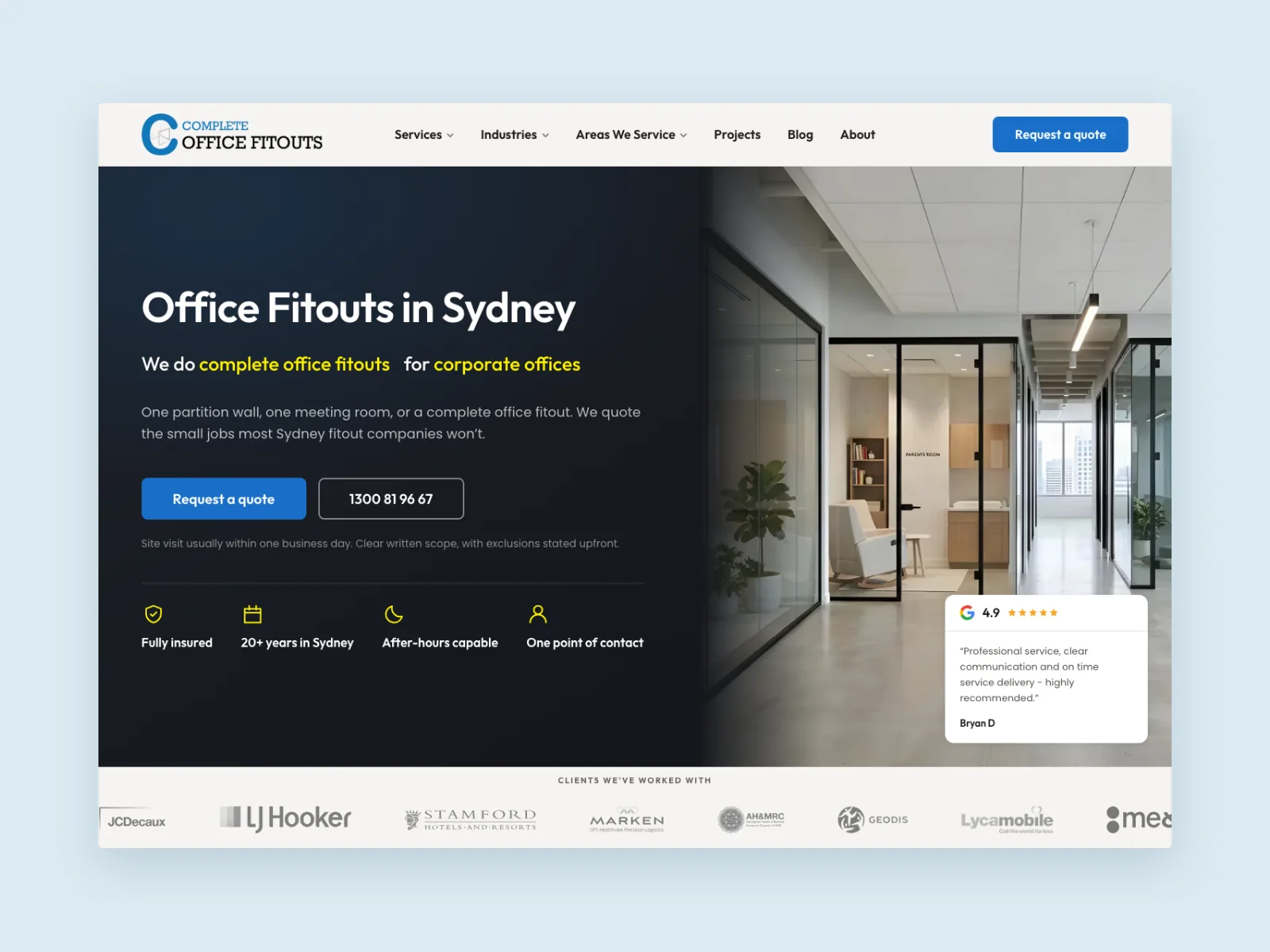
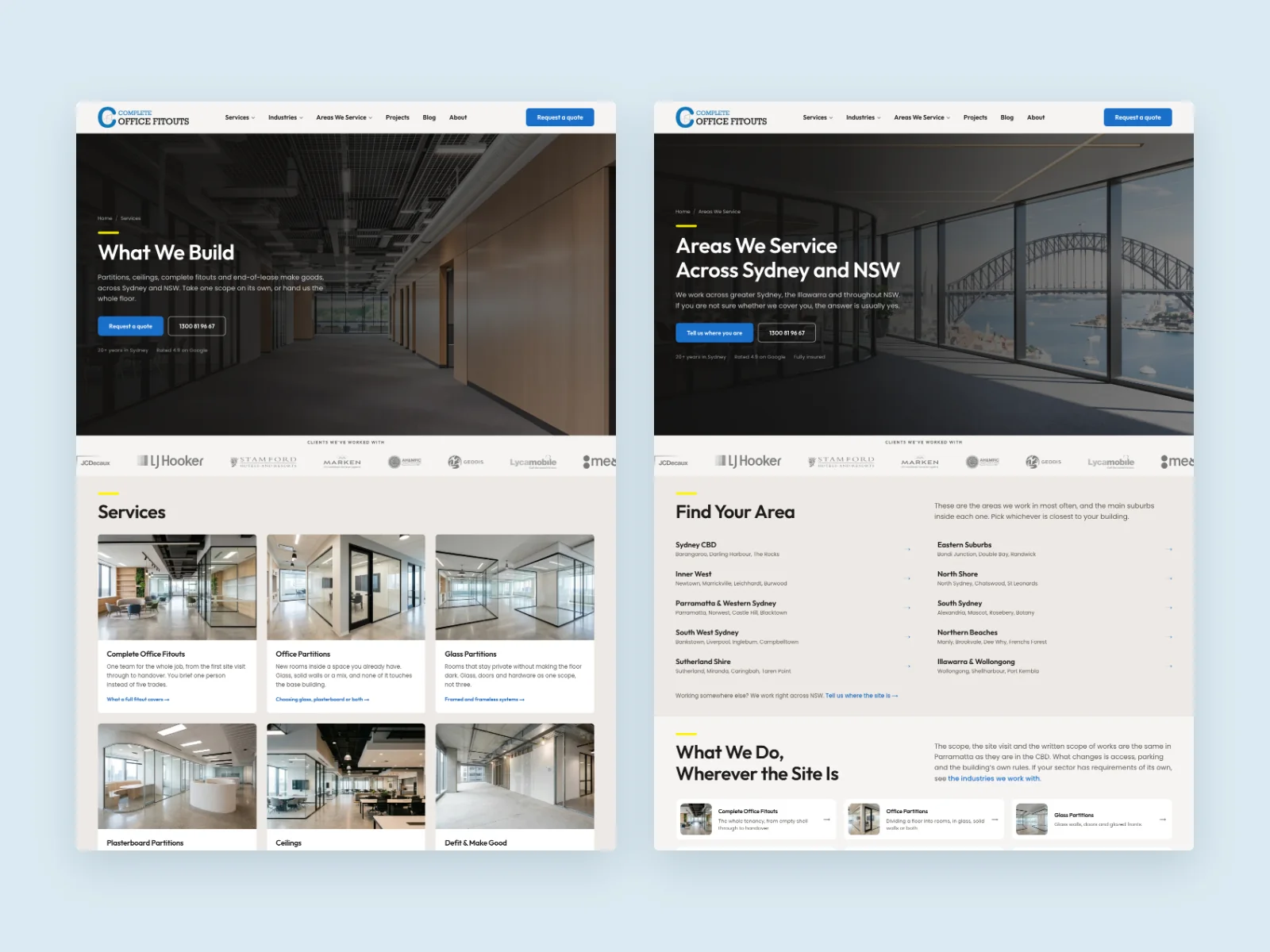
Complete Office Fitouts carries out commercial fitout work across Sydney, Australia. Josh had already designed and built the replacement frontend in Next.js. What the business needed from us was the work behind it: moving an established WordPress site onto the new platform, bringing a substantial blog archive into Sanity, configuring production infrastructure and making the website communicate with the tools the team uses every day. This was a migration and backend engagement, not a frontend design or build.
Move the content without starting the blog again
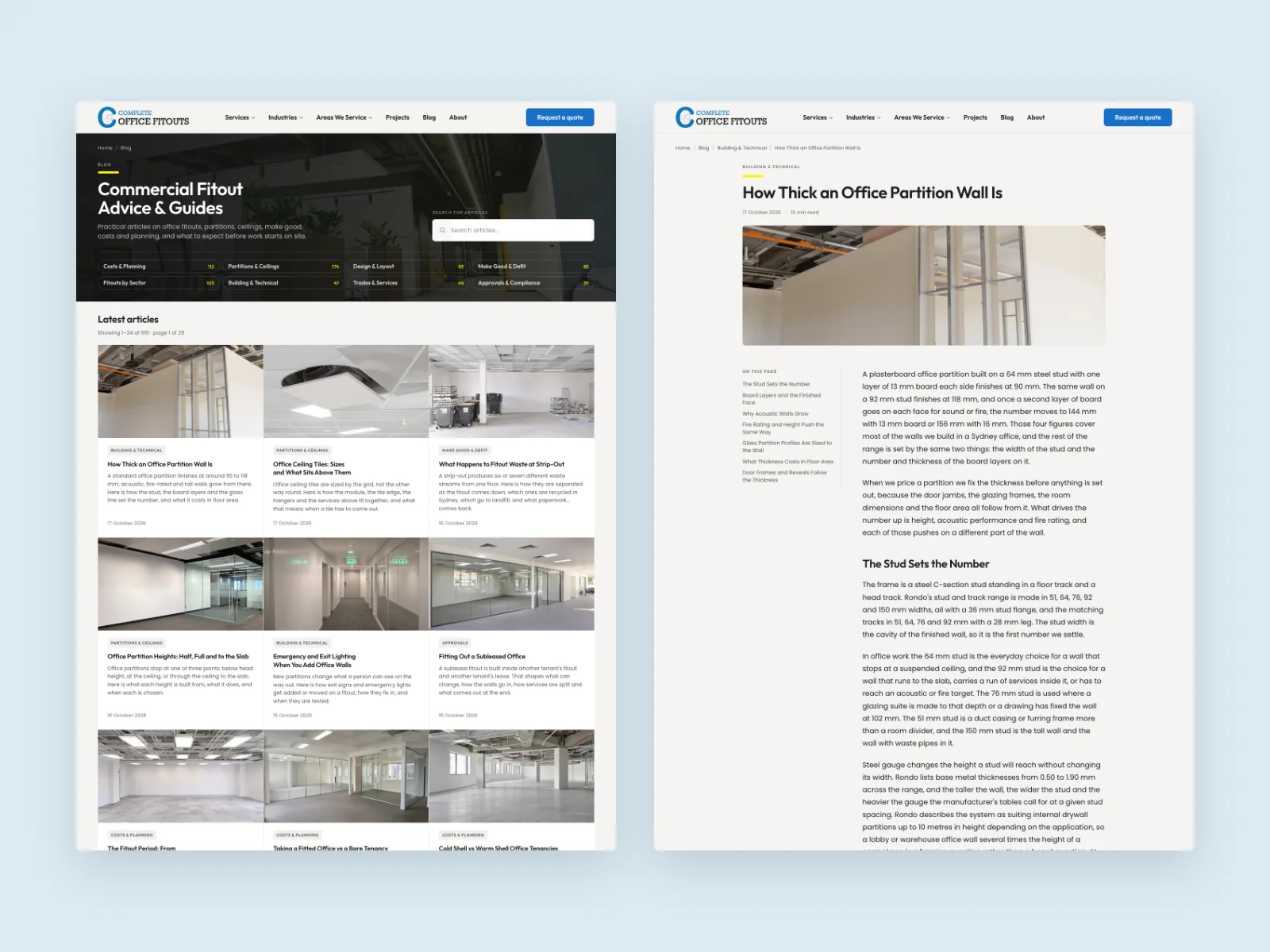
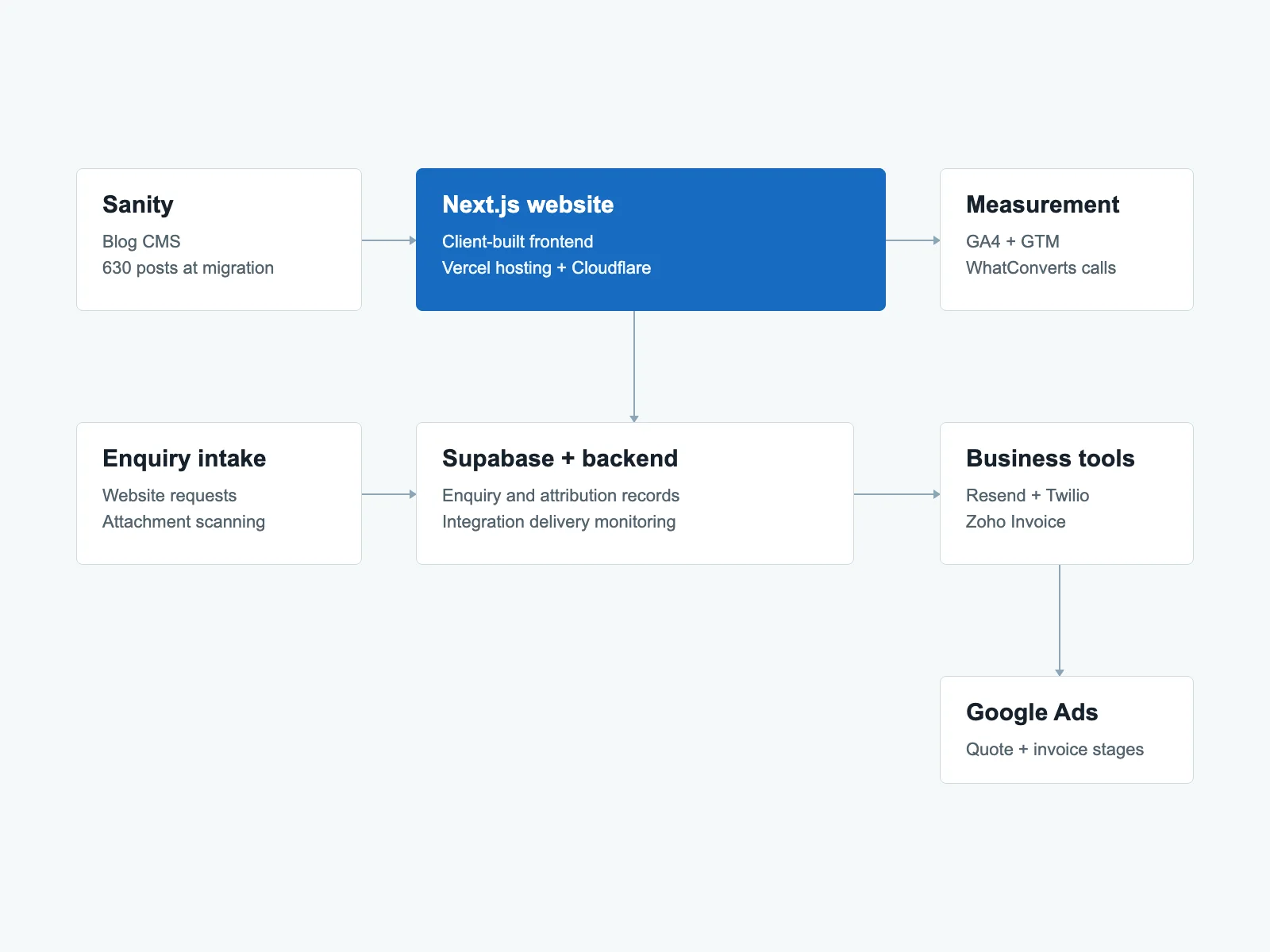
The migration included 630 existing blog posts. We moved the WordPress content into Sanity and checked titles, slugs, body content and SEO fields against the migration records. Sanity manages the blog, while service, industry, location and other commercial pages remain in the Next.js application. That distinction gives the team an editable publishing system without suggesting that every page on the website is CMS-managed. Existing URLs and redirect handling were part of the migration checks.
Bring the client-built frontend into production
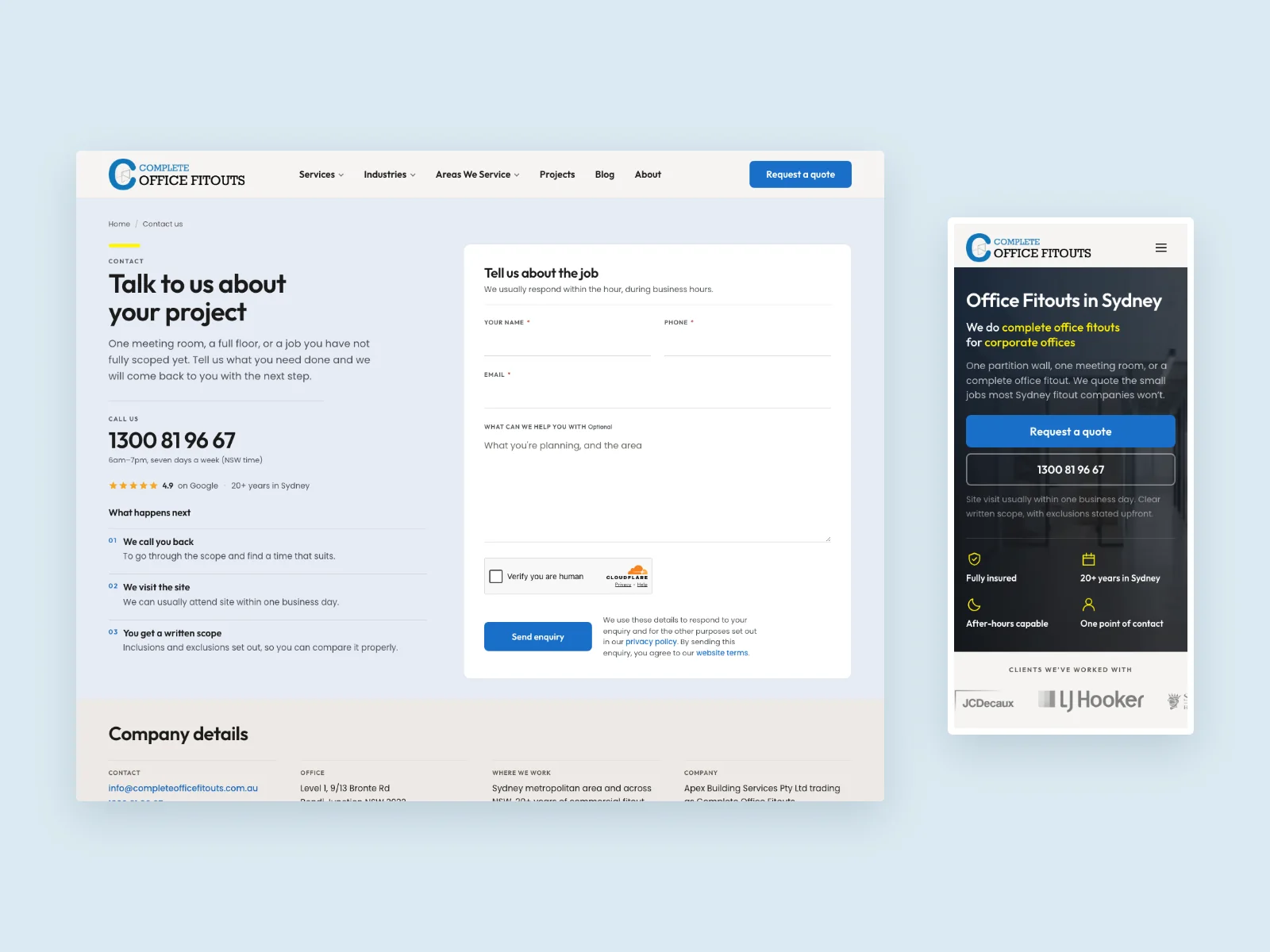
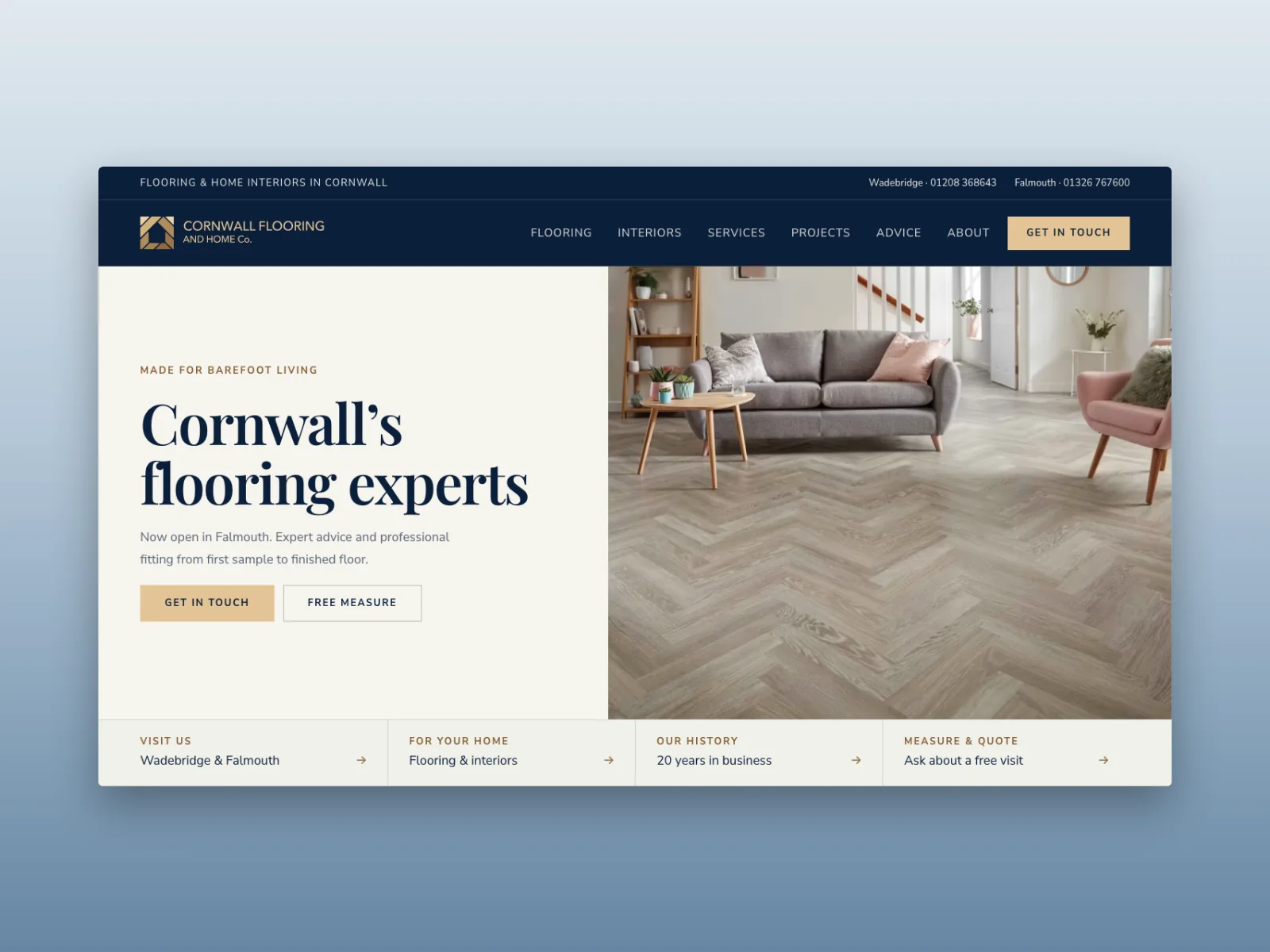
We configured the Next.js deployment on Vercel, with Cloudflare handling DNS and the edge layer. Content, routing, metadata and production behaviour had to be checked together before moving the public domain. The website went live on 11 September 2026, followed by post-launch fixes and performance work. The frontend shown in the gallery is Josh's work; our contribution is the migration, backend and production integration supporting it.
Connect enquiries with the tools behind the business
A quote request needs to reach more than a form inbox. We connected and extended the backend around Supabase for enquiry and attribution records, Zoho Invoice for customer and invoicing workflows, Resend for transactional email and Twilio for SMS. Post-launch work added native enquiry intake, attachment malware scanning and delivery monitoring. The website can pass information into the business workflow, with records and checks to help the team investigate a failed step.
Measure beyond the initial form submission
The measurement work connects GA4, Google Tag Manager, Google Ads and WhatConverts call tracking with the website's enquiry journey. We also implemented a Zoho Invoice to Google Ads offline-conversion feed, using quote-sent and invoice-sent stages to distinguish qualified and converted leads. This gives the business a way to relate advertising to later enquiry stages. It is a measurement capability, not evidence of a particular return on ad spend or an increase in revenue.
What we delivered
- WordPress-to-Next.js migration supporting a frontend already built by the client
- 630 blog posts migrated into Sanity, with content and SEO-field checks
- Vercel deployment, Cloudflare configuration and production cutover
- URL, redirect, metadata and sitemap checks across the migrated website
- Supabase-backed enquiry records and integrations with Zoho Invoice, Resend and Twilio
- Native enquiry intake with attachment scanning and delivery monitoring
- GA4, GTM, Google Ads and call-tracking integration, plus quote and invoice conversion reporting
- Post-launch fixes, performance work and a preserved WordPress archive
The outcome
The client-built Next.js website is live with a Sanity-managed blog and the backend connections needed to support enquiries, notifications, invoicing and marketing measurement. The project shows how an existing frontend can become part of a working business platform through careful migration and integration work. Josh's review highlights our responsiveness, patience and ability to handle the technical work happening behind the scenes.
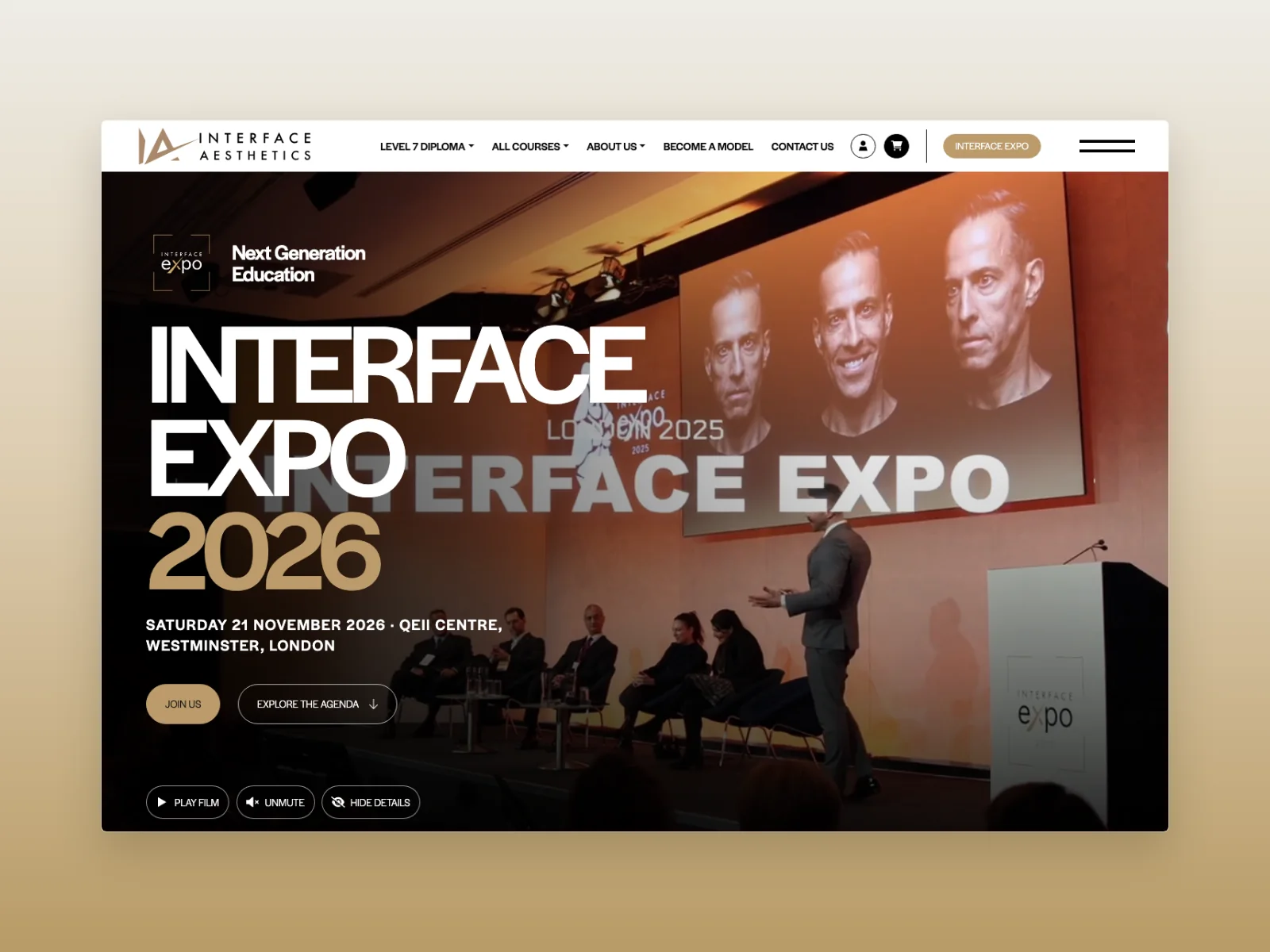
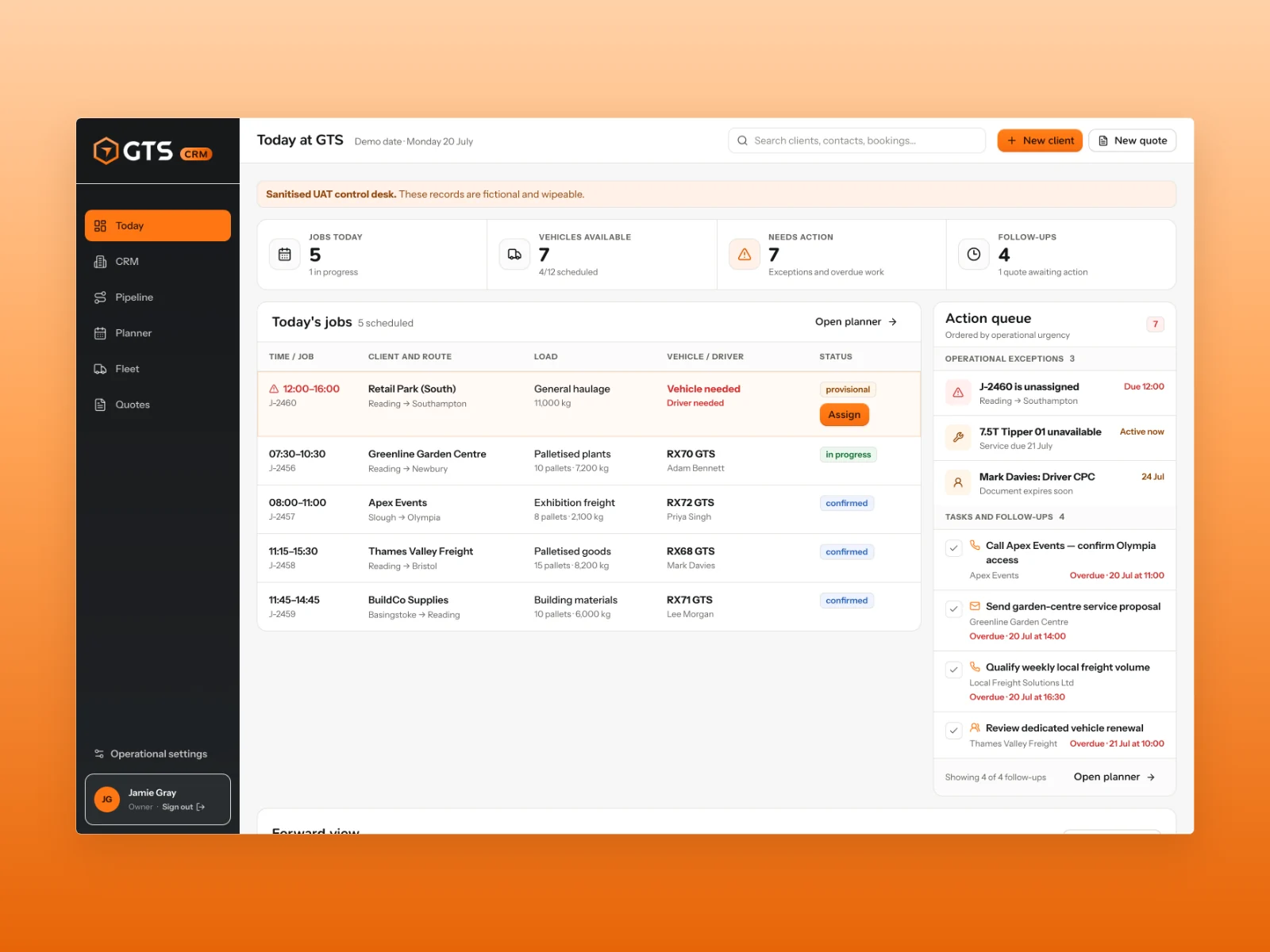
Delivery details are supported by the migration and post-launch records. The 630-post figure describes the migrated archive, not the current blog total. Gallery screenshots show the public website on 17 October 2026; the integration overview is an explanatory diagram, not a software screen. Frontend design and build belong to the client. No comparable before-and-after performance baseline is presented, and no ranking, conversion-rate or revenue increase is claimed.
What the client said
Matt has been absolutely brilliant. I came into this project with a pretty clear idea of what I wanted, but also changed my mind about things constantly as we went. Matt just rolled with it. Nothing was ever too difficult and there was never any drama, he'd just work out how to make it happen. He's ridiculously responsive, very patient and clearly knows his stuff. There were also plenty of things happening behind the scenes that I barely understood, which is exactly why I wanted someone like Matt involved. Couldn't recommend him enough.

Josh Broyda
Complete Office Fitouts
What this means for your project
Moving to Next.js involves more than replacing page templates. Map the content, existing URLs, enquiry data and business integrations before launch. Be clear about which content lives in the CMS, how a lead reaches the team, and who maintains each connection. The right platform is the one that fits those needs, with testing and ongoing ownership planned alongside the migration.
- Plan a WordPress-to-Next.js migration
- Explore web application development
- Discuss your backend and integrations
Case study updated ·


People we've worked with
Real projects, built together
Let’s Grow Your Business Together
Tell us about your project and we’ll show you exactly how we’d grow your business. Book a free 30-minute discovery call, no pressure.