

The brief, the decisions and the delivery
From a customer enquiry to a planned transport job
The challenge
A transport enquiry is only the beginning of the job. The team needs to understand the load, agree a price, check the vehicle and driver, and fit the work into a schedule. We designed and built a private CRM for GTS Reading around that sequence. The brief covered both the commercial side of the business and the practical decisions behind dispatch. Customer history, quotes and fleet availability needed to belong to the same workflow. This software project is separate from our work on the company's public website.
Make today's work the starting point
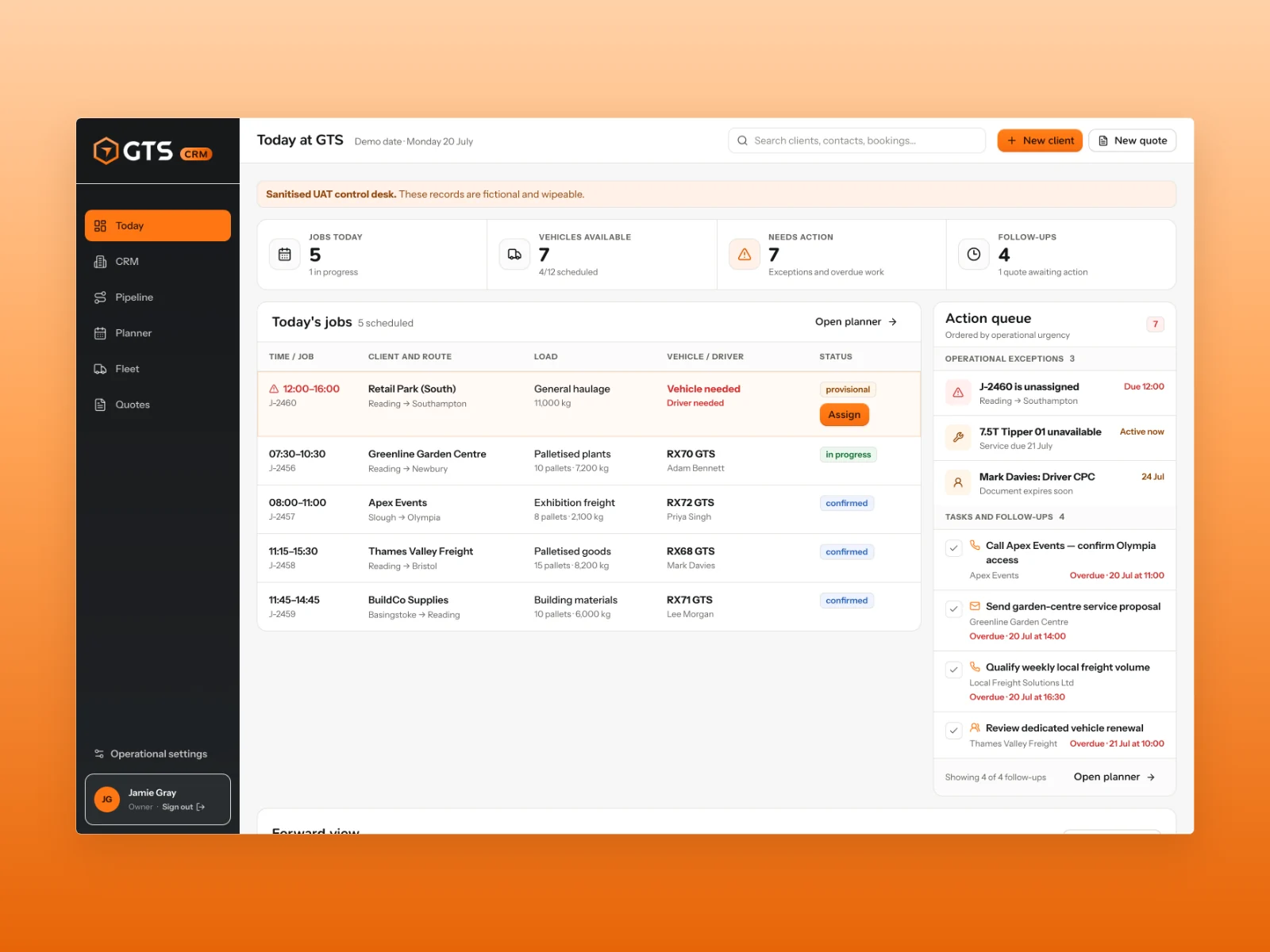
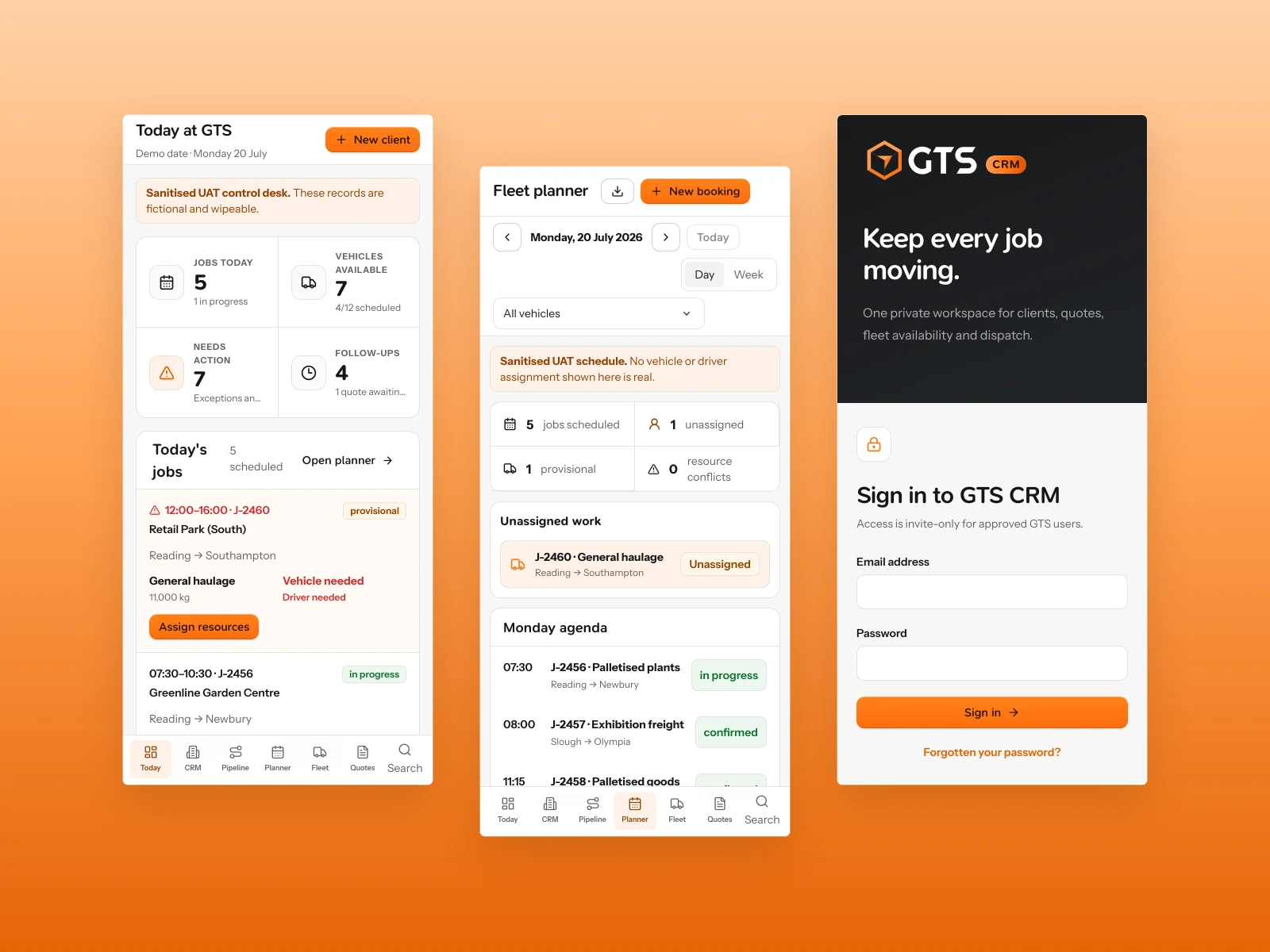
The Today control desk brings scheduled jobs, available vehicles, overdue follow-ups and operational exceptions into one view. Unassigned work is visible alongside confirmed runs, with the client, route, load and current resources attached. We designed a consistent navigation system for CRM, Pipeline, Planner, Fleet and Quotes, with search across the workspace. On mobile, the planner becomes a focused agenda so the next job remains readable without squeezing the desktop timeline onto a small screen.
Keep the relationship attached to the opportunity
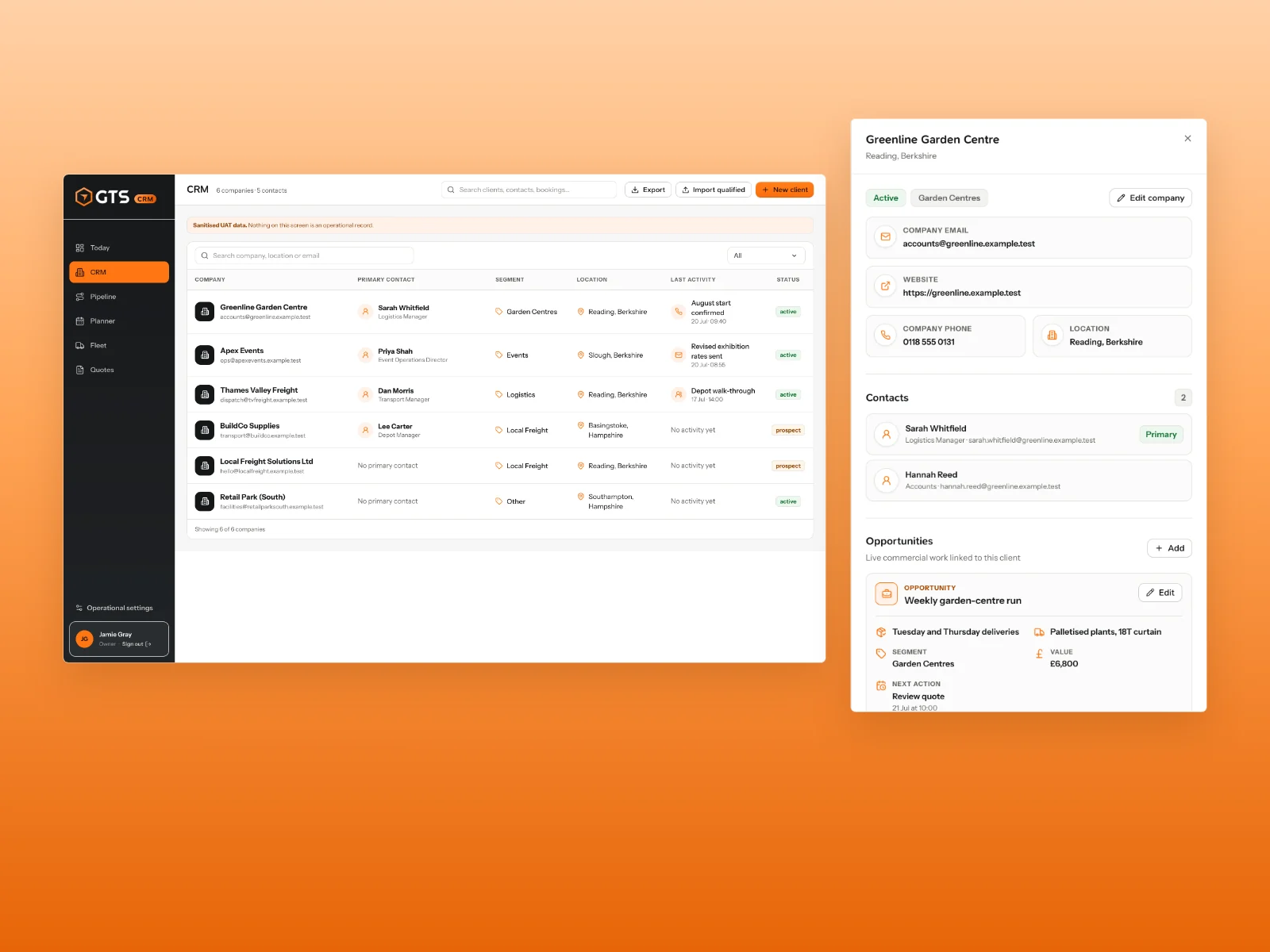
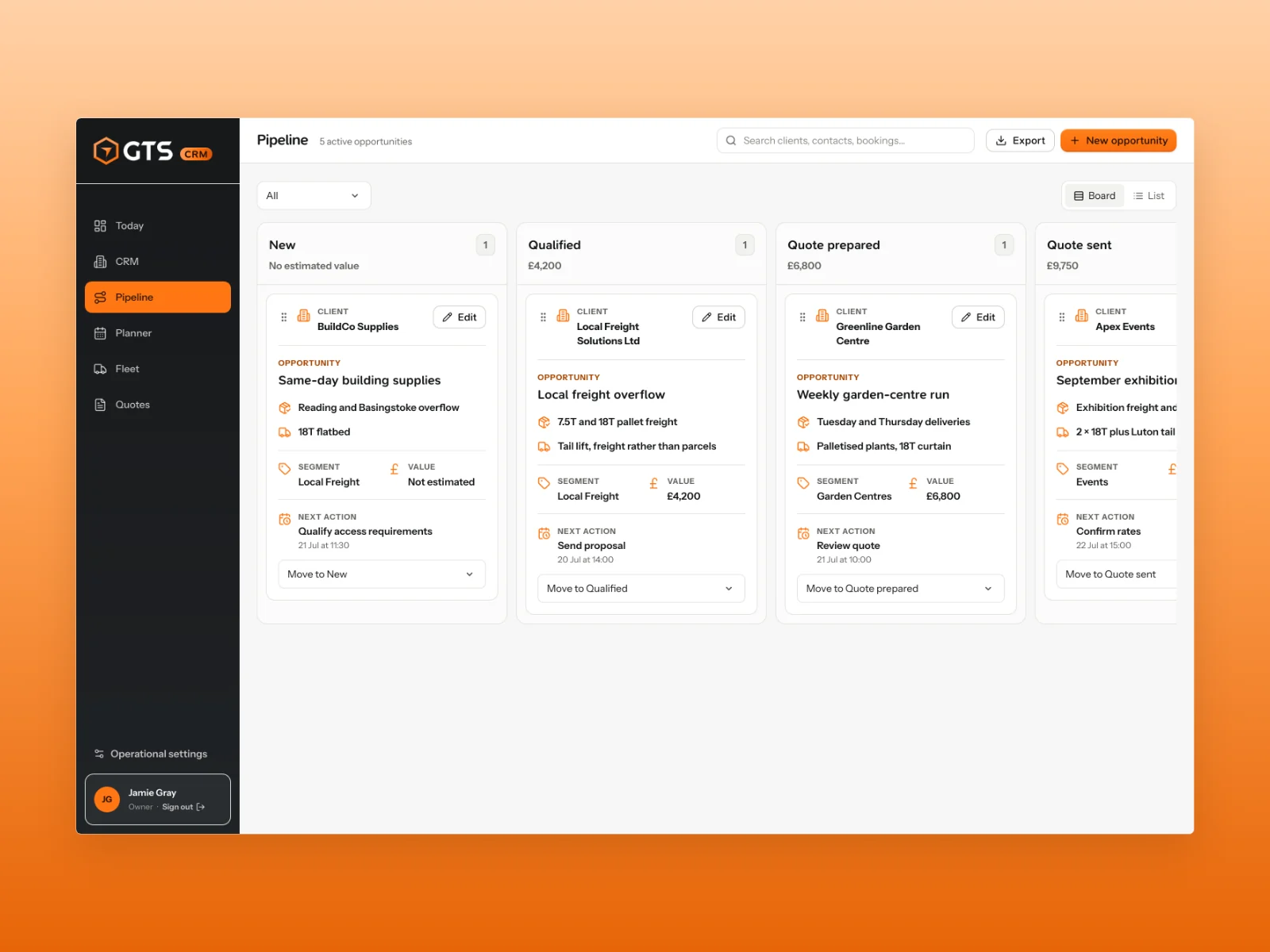
Company records hold contacts, addresses, calls, notes and reminders. Opportunities then track service needs, estimated value and the next action through a sales pipeline. Stage changes retain their history, while deferred and lost opportunities require useful context. A prepared quote can stay linked to the original customer and opportunity, giving the team a route back to the conversation behind the work. Recurring reminders and follow-up tasks support the longer relationships as well as individual enquiries.
Give pricing a controlled source of truth
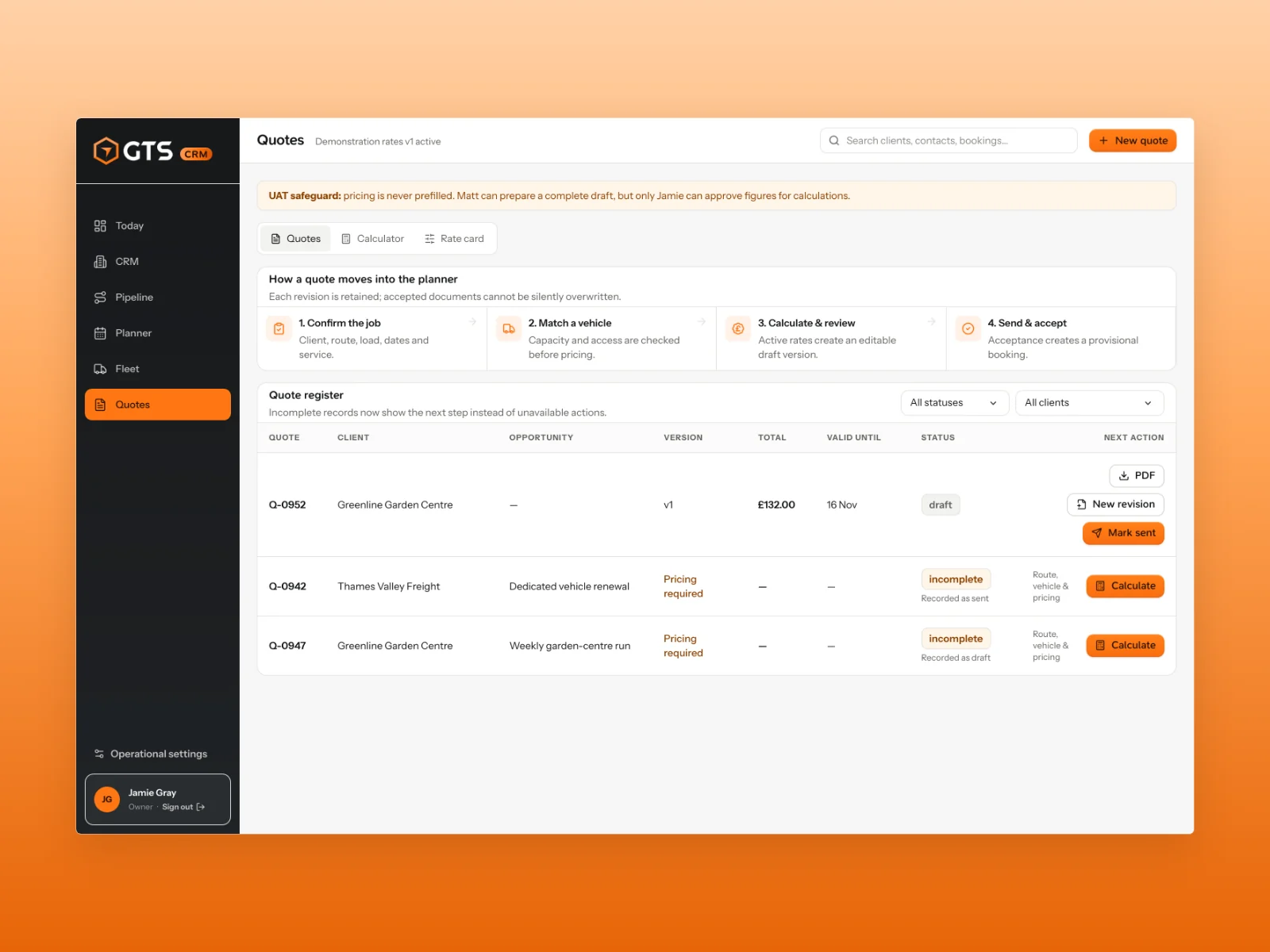
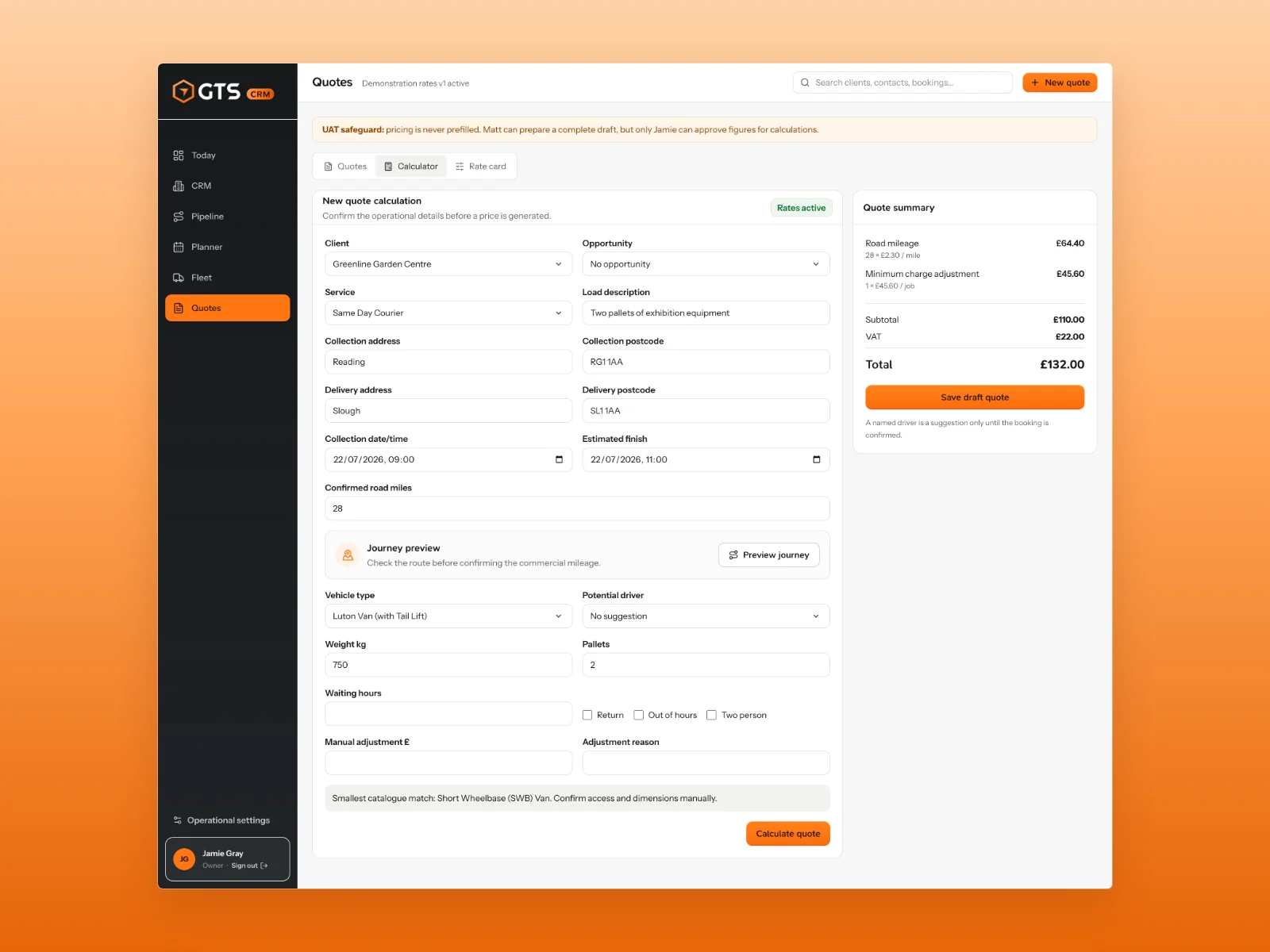
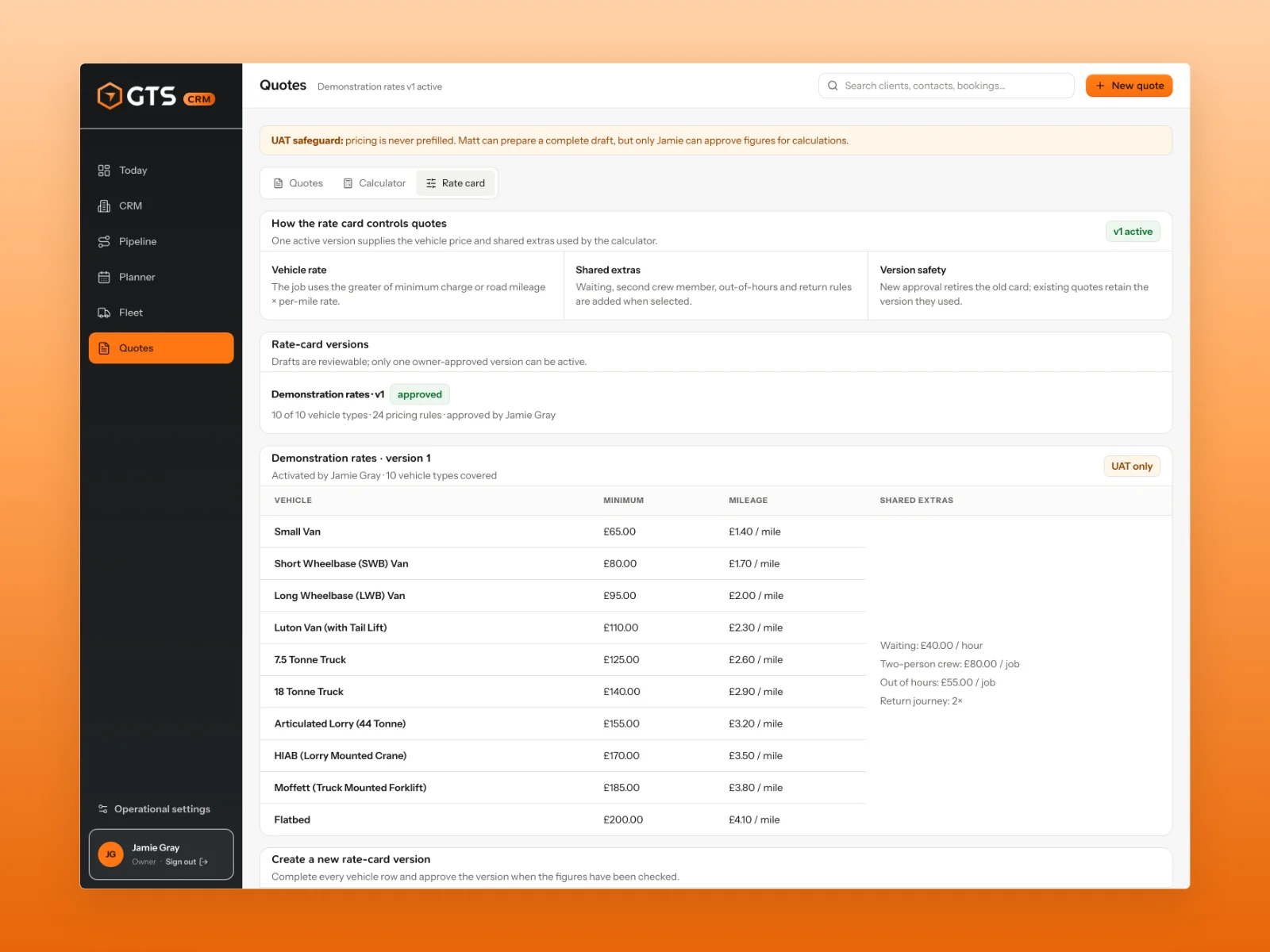
We built the rate-card system and quote calculator together. Vehicle minimums, mileage rates, waiting time, extra crew, out-of-hours work and return rules feed an itemised calculation. Only an owner-approved rate card can be used for pricing. Approved versions are immutable, and saved quotes retain the version and figures used at the time. The quote register supports revisions, status changes, expiry and PDF generation. Route estimates can inform the calculation, but the confirmed quote mileage remains an explicit commercial decision.
Plan with exact vehicles and drivers
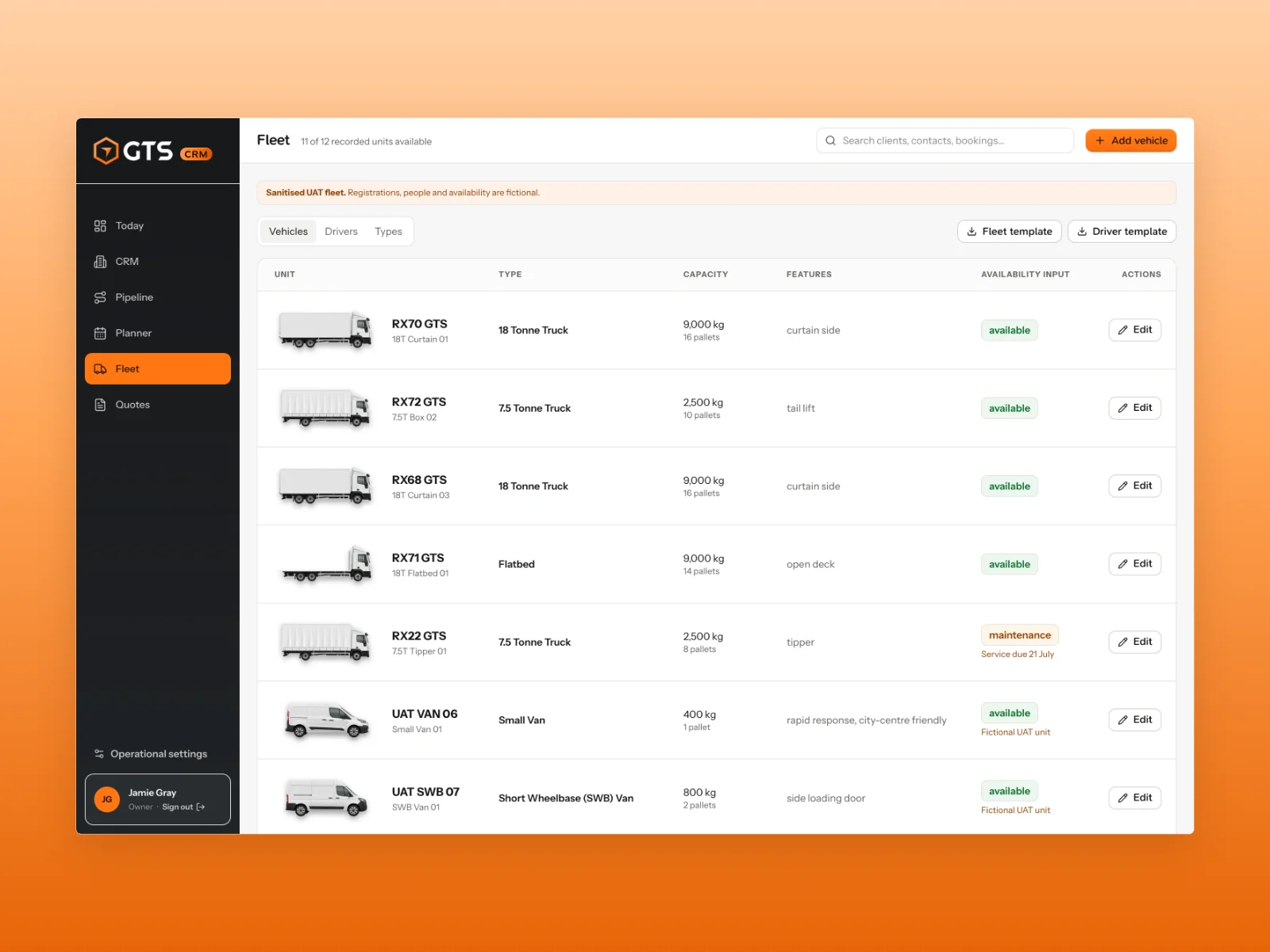
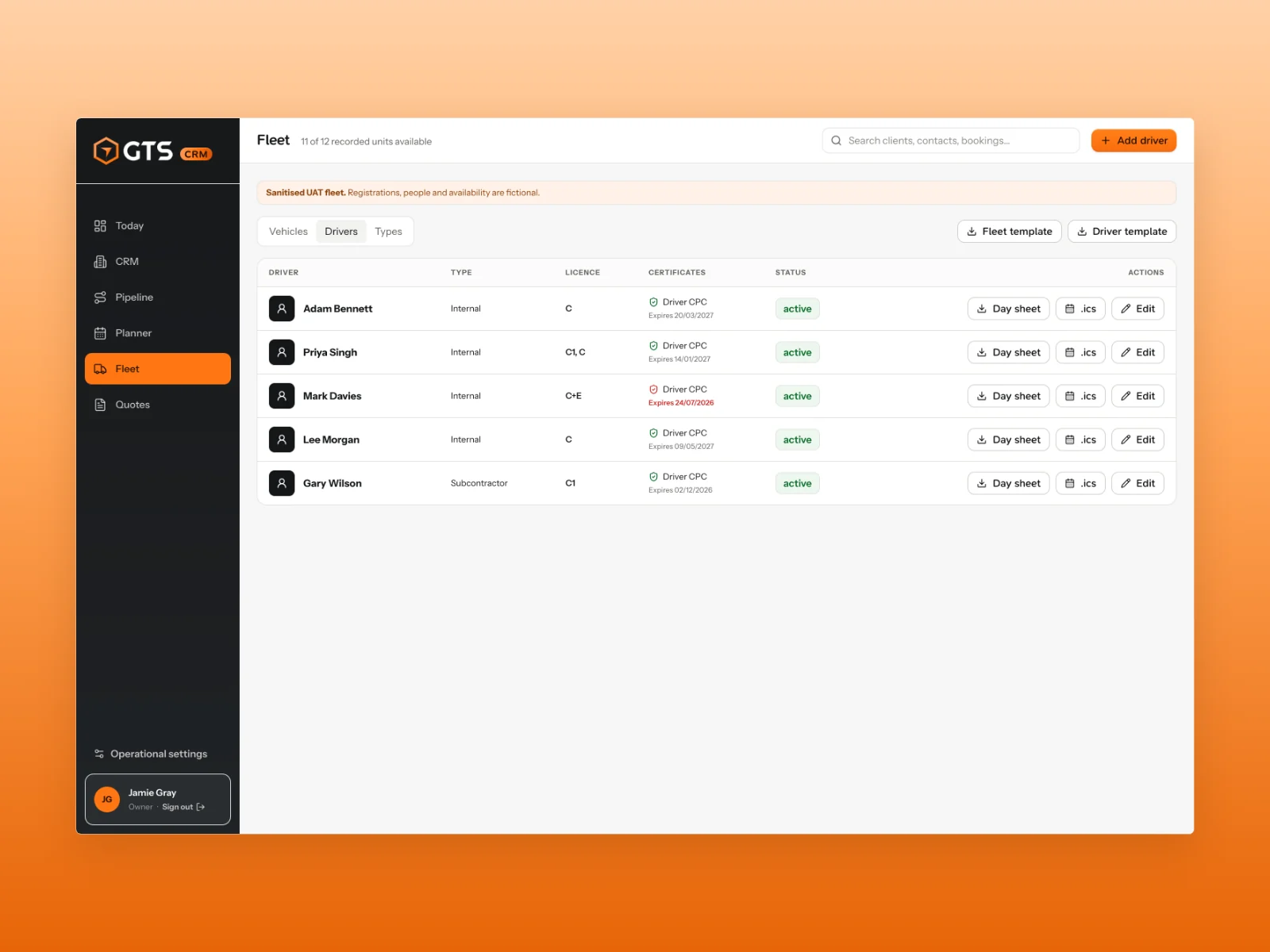
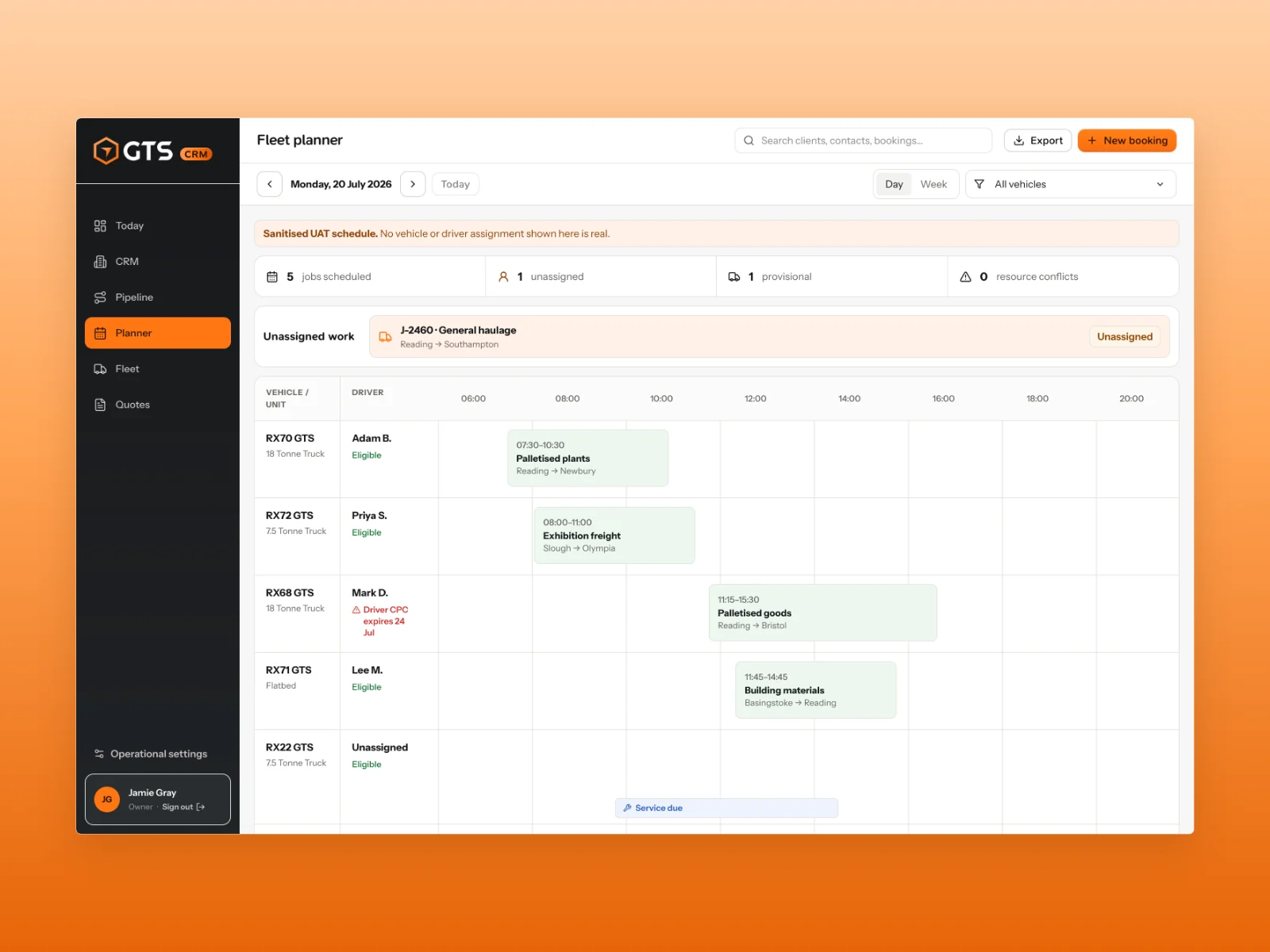
Fleet management records individual units, payloads, equipment and periods of unavailability. Driver records include licence categories, certifications and absences. The planner brings those resources together with provisional, confirmed and in-progress bookings. Availability checks account for the load and existing assignments; database constraints also block overlapping allocations. Multi-stop jobs, weekly repeat bookings, printable driver day sheets and read-only calendar exports extend the workflow beyond a calendar view. This is dispatch planning, not a claim of live GPS tracking or a separate driver app.
Show the journey as well as the time slot
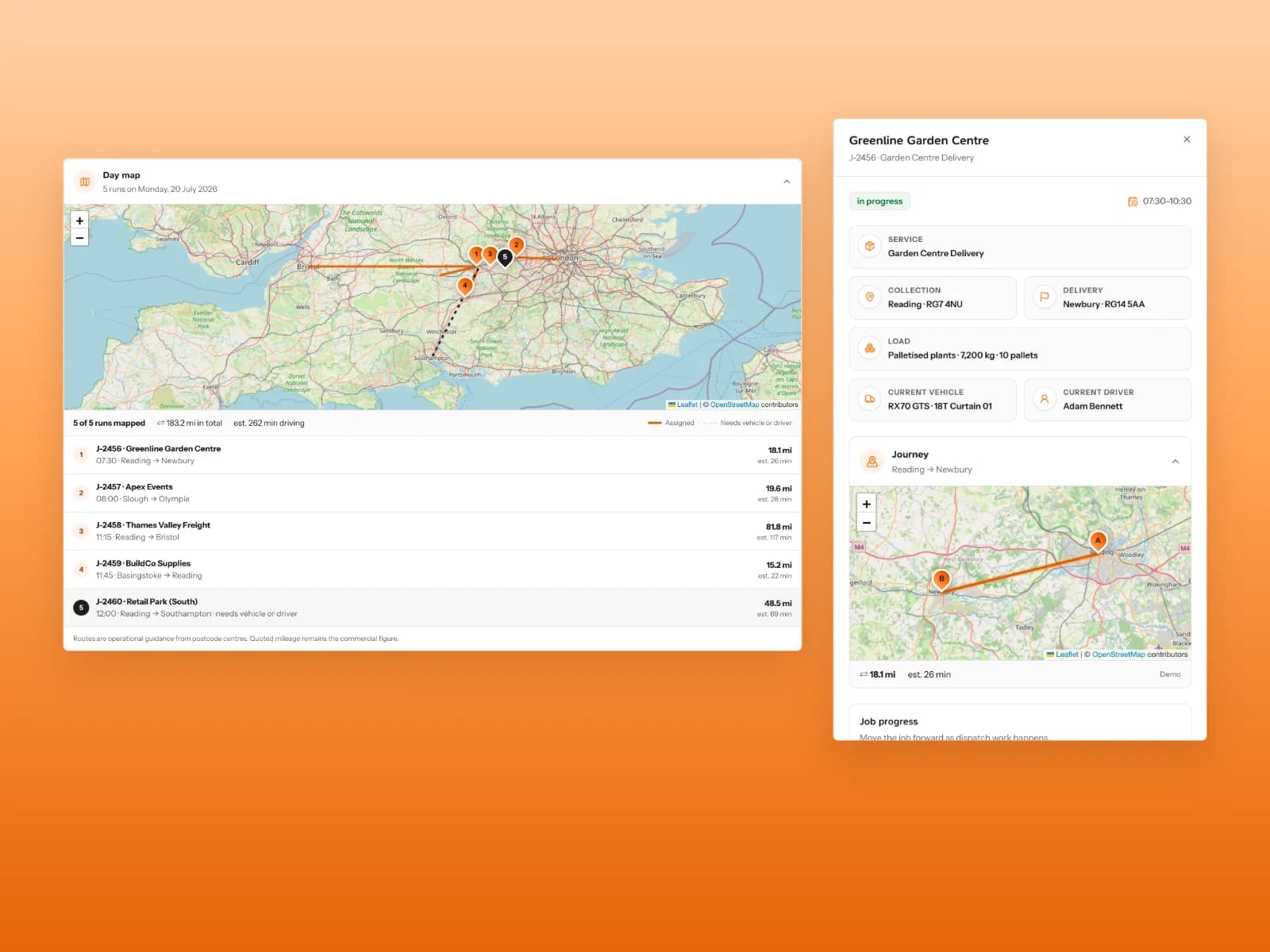
A booking can open its own journey panel, with ordered stops, mileage and estimated duration. The day map gathers the selected day's runs into one view and distinguishes assigned jobs from work still needing a vehicle or driver. We used Leaflet for map presentation and built routing with cached geometry and a fallback when a routing provider is unavailable. The screenshots use demonstration routes; the presence of a map does not imply a live vehicle-tracking connection.
Build the application around its business rules
Next.js, React and TypeScript provide the application, with Tailwind CSS and accessible interface primitives for the UI. Supabase supplies authentication and PostgreSQL data storage. Organisation-scoped row-level security, authenticated server actions, transactional updates and an audit history support controlled changes to operational records. React PDF handles quote and driver documents. We also implemented a signed WordPress enquiry-intake endpoint and private dispatch-update support. Their operational activation is a separate step from the application build.
What we delivered
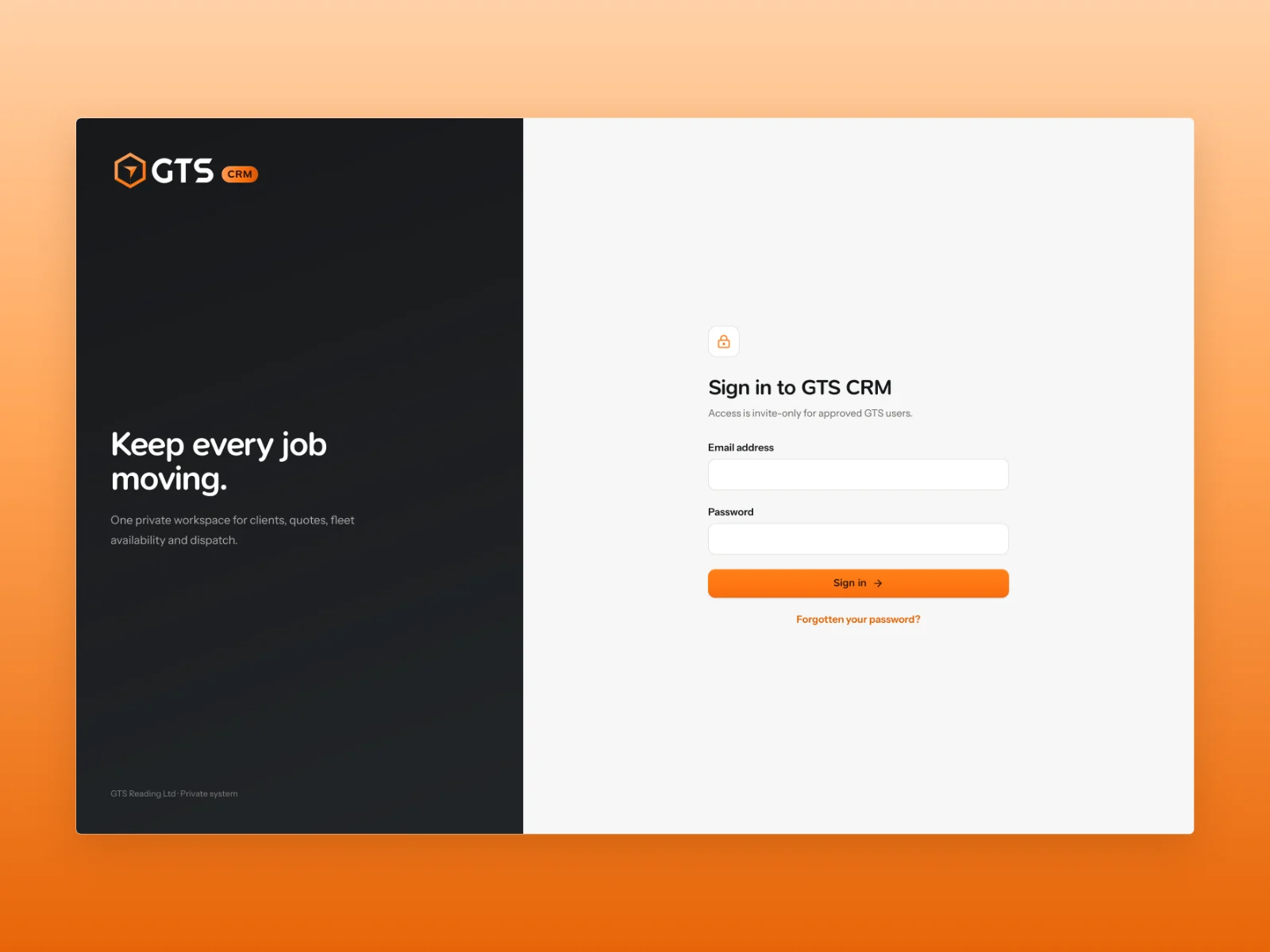
- Bespoke application UX/UI, GTS-branded interface and invite-only sign-in
- Today control desk with jobs, availability, exceptions and follow-ups
- Company and contact records, interaction history and recurring reminders
- Sales pipeline with opportunity ownership, next actions and stage history
- Versioned rate cards, itemised quote calculator, revisions and PDF documents
- Exact vehicle and driver records, capacity rules and unavailability periods
- Day and week dispatch planning with resource-conflict checks and repeat bookings
- Booking journey panels, day maps, driver day sheets and calendar exports
- Reporting, CSV exports, operational settings and qualified-prospect import controls
- Next.js and Supabase backend, audit history and signed WordPress intake endpoint
The outcome
The working application connects the commercial and dispatch workflow in one private system: enquiry, customer record, opportunity, quote, provisional booking and resource assignment. The build includes a protected UAT environment for client review. It is presented here as delivered application functionality, not as a confirmed production rollout or measured improvement in revenue or dispatch time. The gallery gives a detailed view of the interface, from sign-in through pricing and planning to the mobile workspace.
Screenshots were captured from an isolated local copy of the CRM on 17 October 2026 using its fictional demo fixtures. Customers, drivers, registrations, schedules and demonstration prices are not operational records. The login capture uses the normal sign-in interface with no connected authentication provider. Repository implementation records support the described features; production launch, real-data onboarding, live routing, hosted realtime updates and outbound email activation remain separate approval steps. No private CRM access link is published.
What this means for your project
A useful business application connects decisions that depend on each other. For transport, an accepted quote needs to lead into a booking with the right vehicle, a suitable driver and an available time slot. Designing those relationships early lets the interface stay focused while the data and business rules handle the detail behind it.
- Explore bespoke web app development
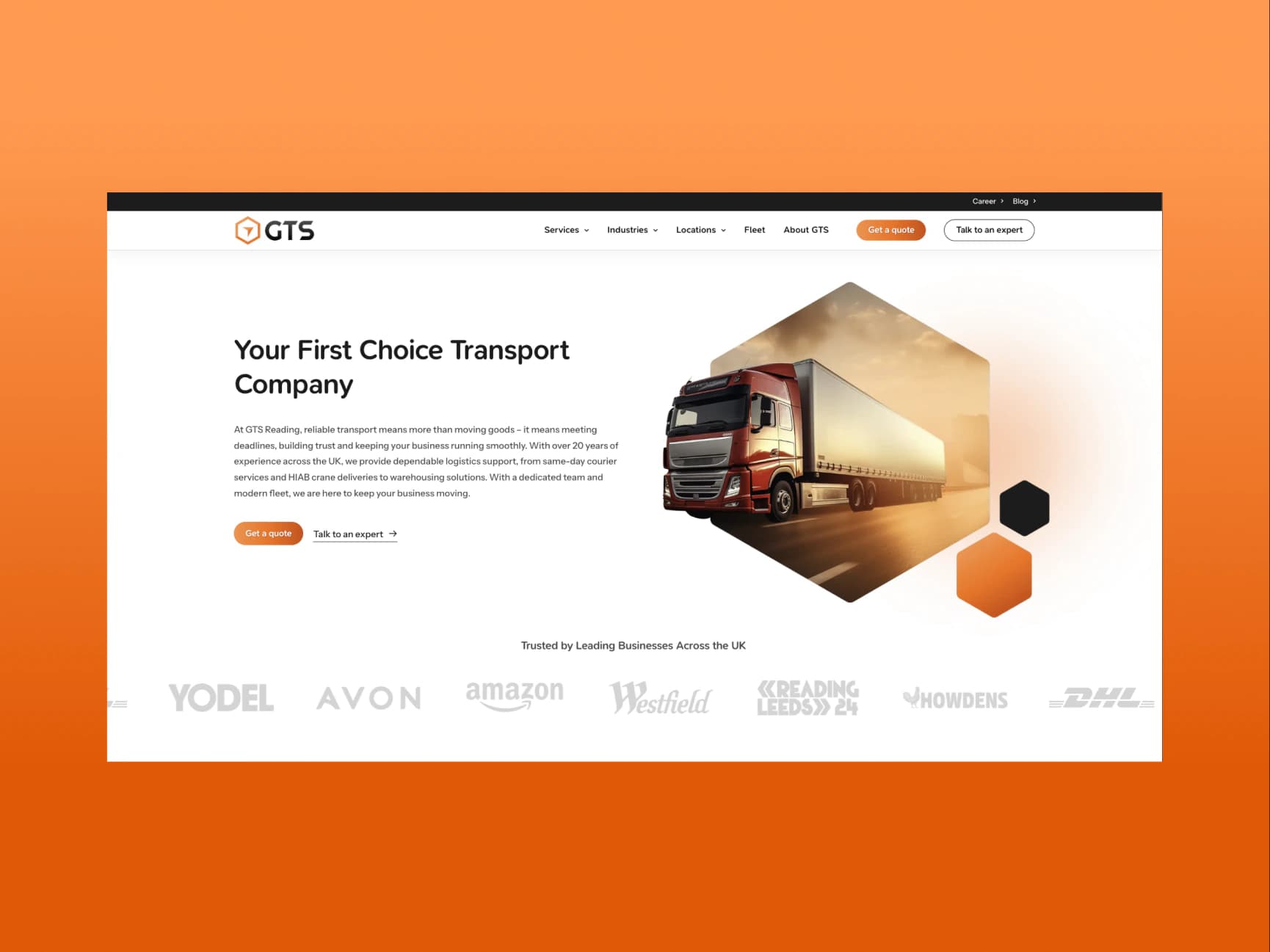
- See the separate GTS website project
- Discuss your business application
Case study updated ·



People we've worked with
Real projects, built together
Let’s Grow Your Business Together
Tell us about your project and we’ll show you exactly how we’d grow your business. Book a free 30-minute discovery call, no pressure.