


Key Takeaways
- Brand guidelines are the rulebook that keeps everything you produce looking and sounding like you.
- Consistency is not cosmetic: consistent branding is linked to a revenue uplift of around 23%.
- The essentials: logo usage, colours, typography, imagery and voice, plus a few do's and don'ts.
- A small business needs a clear, usable document, not a 100-page corporate manual.
- Good guidelines save time and money, because decisions get made once, not every time.
Most small businesses have a logo. Far fewer have brand guidelines, and you can usually tell, because the website, the social posts and the printed brochure all look like they came from three different companies.
That inconsistency quietly costs money. Lucidpress found consistent branding can lift revenue by around 23%, and the only reliable way to stay consistent is to write the rules down. Brand guidelines are simply that rulebook. This guide breaks down exactly what should be in them, why they matter, and how much detail a small business actually needs.
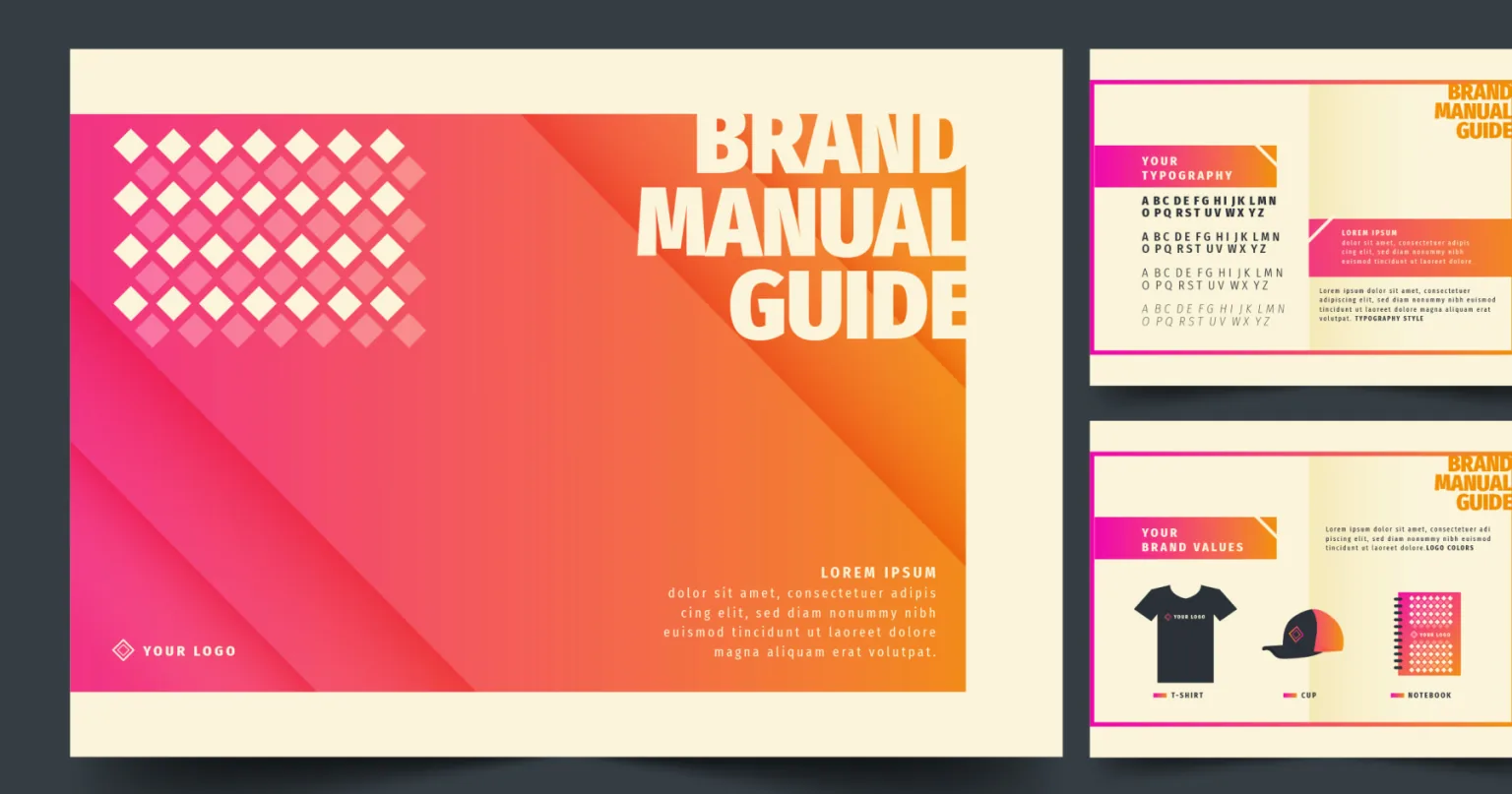
What Brand Guidelines Are For
Guidelines exist so that everyone, you, your team, a freelancer, a printer, applies your brand the same way every time. They turn 'it should feel right' into clear, repeatable rules. The payoff is consistency, which builds recognition and trust, and saves you from re-deciding the same things over and over. They are the practical backbone of the revenue uplift that comes with a consistent brand.
The Essentials Every Set Should Include
At a minimum, your guidelines should cover:
- Logo usage: the versions, clear space, minimum size, and what not to do to it.
- Colour palette: your exact colours with the codes (HEX, RGB, CMYK) so they match everywhere.
- Typography: your fonts and how to use them for headings and body text.
- Imagery and graphics: the style of photos, icons and illustrations that fit your brand.
- Voice and tone: how you sound, with a few example phrases.
- Do's and don'ts: quick visual examples of right and wrong.
That covers the vast majority of real-world situations.
How Much Detail Do You Actually Need?
Here is where many businesses go wrong: they assume guidelines mean a 100-page corporate manual. They do not. A small business needs a clear, usable document that someone can follow in five minutes, not a tome nobody opens.
In our experience, a focused set of guidelines, often just a handful of pages, delivers almost all the value. The goal is consistency in practice, not exhaustiveness for its own sake. You can always expand it as you grow.
Keep Them Living, Not Lost in a Drawer
Guidelines only work if people use them. Keep them somewhere everyone can reach, set them up in the tools your team actually uses (a Canva brand kit is perfect for day-to-day content), and revisit them when your brand evolves. A simple, well-used set beats an elaborate one that gathers dust.
Frequently Asked Questions
What should brand guidelines include? At a minimum: logo usage, colour palette with codes, typography, imagery style, voice and tone, and a few do's and don'ts. That covers most real-world situations for a small business.
Do small businesses really need brand guidelines? Yes, if you want to look consistent and credible. Without them, every new design drifts a little, and consistency is linked to higher revenue. They need only be a few clear pages.
How long should brand guidelines be? For most small businesses, a handful of clear, usable pages is plenty. A giant corporate manual is overkill; the goal is consistency in practice, not exhaustiveness.
What is the difference between a logo and brand guidelines? A logo is one element. Brand guidelines are the rulebook for your whole identity, including how the logo, colours, fonts, imagery and voice are used together consistently.
Can I set up brand guidelines in Canva? You can put your colours, fonts and logos into a Canva brand kit so day-to-day content stays on-brand. A short guidelines document plus a Canva brand kit is a great combination for a small team.
The Bottom Line
Brand guidelines are the rulebook that keeps your business looking and sounding like itself everywhere it shows up, and that consistency is tied to real revenue. Cover the essentials, logo, colour, type, imagery and voice, keep it clear and usable, and make sure people actually use it. You need a practical document, not a corporate tome.
If you want a brand identity and a clear set of guidelines you can actually use, get in touch. We offer brand identity and guidelines for UK businesses.