

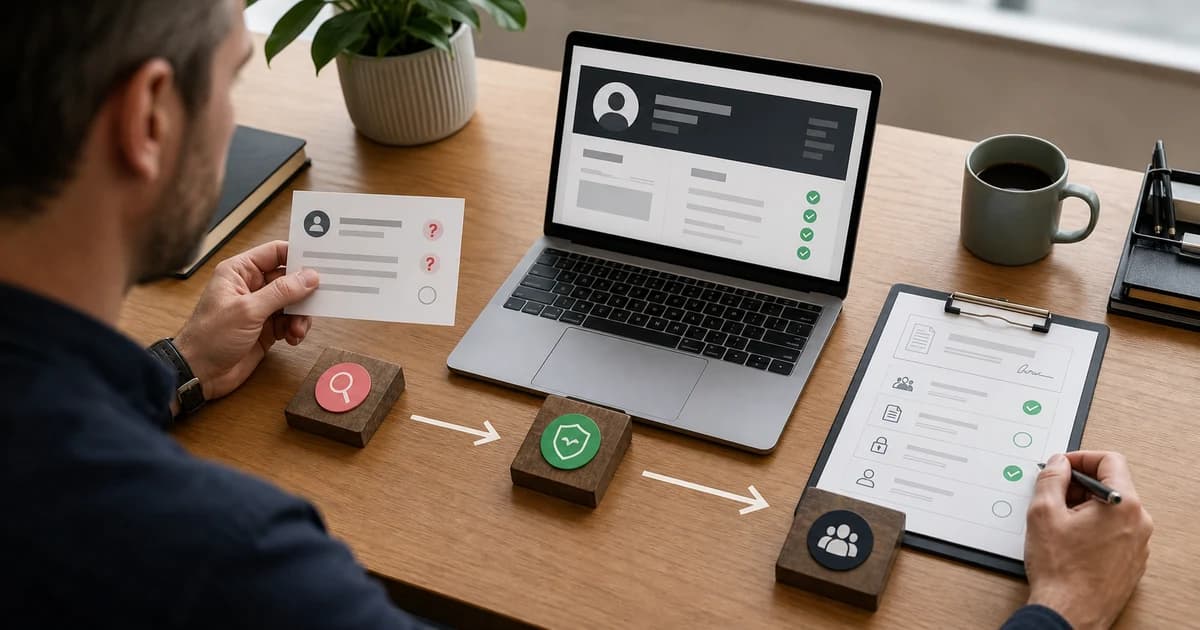
Key Takeaways
- Google does not select one marketing agency for your business. Its Partner programme recognises companies that meet current Google Ads requirements.
- A Google Partner or Premier Partner badge relates to paid advertising capability, spend, performance requirements and certifications. It is not a certificate for every marketing discipline.
- Verify the company through its official linked profile or the Google Partners directory. A copied badge image is not enough.
- Partner status is one procurement signal. Relevant work, account ownership, measurement, fees, communication and commercial judgement still matter.
- Keep administrative ownership of your advertising and analytics accounts. Give an agency appropriate access instead of building the whole operation inside an account you cannot control.
Google does not publish a simple recommendation saying “hire this marketing agency”. It operates the Google Partners programme for companies that manage Google Ads, and qualifying businesses may display Google Partner or Premier Partner status. That can be useful evidence, but it is not a general endorsement of an agency's SEO, branding, web development, content or sector expertise.
If somebody says they are “recommended by Google”, ask exactly what they mean and verify it. The accurate wording may be that the business is a Google Partner. That is a specific, checkable status—not a personal recommendation from Google.
What Is the Google Partners Programme?
Google Partners is a programme for agencies and third parties that manage Google Ads accounts on behalf of other businesses. Companies can join the programme and, if they meet the current conditions, qualify as a Google Partner. A smaller group may qualify as Premier Partners.
Google's official Partner requirements currently cover three categories: performance, spend and certifications. Google checks those requirements regularly. Premier Partner selection is more restrictive and is assessed relative to other participating companies in a country.
The details can change, so use the live Google documentation rather than an old agency article when checking thresholds. The important distinction is stable: the programme concerns the company's Google Ads work.
Partner status can show that a company has managed qualifying advertising activity and has people with relevant certifications. It cannot tell you, by itself, whether the proposed campaign fits your margins, whether the landing page is convincing or whether the person in the sales call will manage your account.
What a Google Partner Badge Does—and Does Not—Show
It can show current Google Ads programme status
Google says businesses that meet the requirements can access an official badge for approved online properties and marketing material. Its badge guidelines also state that only Partners and Premier Partners can display the corresponding badges.
This is more meaningful than an unverified claim such as “Google expert”. However, it remains one piece of evidence.
It does not cover all digital marketing
A paid-search specialist and an SEO specialist solve different problems. Google Ads involves campaign structure, bidding, budgets, audiences, creative, policy and landing pages. SEO involves crawling, relevance, site structure, content, authority and organic search behaviour.
The badge does not automatically validate:
- organic SEO expertise;
- social media strategy;
- email marketing;
- brand design;
- web development;
- conversion research;
- analytics implementation outside the programme scope;
- knowledge of your sector.
If you need several disciplines, ask for evidence for each. Our comparison of PPC and SEO explains why the channels should not be treated as interchangeable.
It does not guarantee campaign performance
No badge can make poor economics work. Advertising performance still depends on demand, competition, budget, targeting, creative, website experience, pricing, sales follow-up and measurement.
The agency should define what it can control: research, setup, testing, exclusions, budget management, reporting and improvement. Be cautious when status is used to support a guaranteed return without inspecting the account and sales process.
How to Verify Google Partner Status
Step 1: Ask for the official profile
A genuine agency should be able to share its official Google Partners profile or a badge that links to it. Check that the company name and website match the supplier you are considering. Do not treat a screenshot, social graphic or static badge image as verification.
You can also search the official Google Partners directory for participating companies. Directory information is a starting point; still confirm that the proposal and legal business name match the profile.
Step 2: Check the exact status
The profile should make clear whether the business is a Google Partner or Premier Partner. “Member of Google Partners” is not the same as having earned Partner status. Google's own status-check guidance separates not-a-Partner, Partner and Premier Partner states.
The agency can see its status in its registered Google Ads manager account under the Partners programme. Google notes that requirements are checked daily and that badge updates can take time, so ask for current evidence if anything looks inconsistent.
Step 3: Check what the claim actually applies to
Read the proposal. Is the agency being hired for Google Ads, or is the badge displayed beside a promise about organic rankings, branding or website security? The closer the evidence is to the service being bought, the more useful it becomes.
For a Google Ads brief, ask which relevant campaign types the proposed team manages and which certifications they hold. Certification is not a substitute for judgement, but it helps clarify whether the expertise sits with the people doing the work.
Step 4: Verify the people and contract
Agency-level status does not tell you who will work on the account. Ask to meet the day-to-day lead. Confirm whether delivery is in-house, subcontracted or handed to a junior team after the sale.
Then check the contract name, Companies House details where appropriate, VAT wording, notice period, data access, intellectual property and handover responsibilities. Partner status should not stop normal supplier due diligence.
How to Compare a Google Ads Agency Properly
Relevant problem and market experience
A case study is useful when it resembles your commercial problem. A national retailer's Shopping campaign tells you little about generating qualified enquiries for a local professional service. Ask how the agency handles your sales cycle, geography, stock, regulation and margins.
Respect client confidentiality. You need enough detail to understand the method and outcome, not another company's private dashboard.
A clear first-90-day plan
A useful proposal should explain:
- access and tracking checks;
- account and search-term review;
- campaign structure and priorities;
- creative and landing-page responsibilities;
- budget allocation and limits;
- the testing rhythm;
- reporting and decision meetings;
- what success and failure will look like.
The plan should also explain what happens if tracking is broken. Spending more while key events are unreliable does not create better evidence.
Our Google Ads and PPC management service describes how campaign work connects to commercial goals. The broader guide to PPC marketing can help a first-time advertiser understand the terminology before comparing proposals.
Transparent fees and ad spend
The proposal should separate:
- the media budget paid to Google;
- the agency's setup and management fee;
- creative or landing-page costs;
- analytics or consent work;
- paid tools or call tracking;
- VAT where applicable.
Ask whether the fee changes when spend increases and why. A percentage-of-spend model can be legitimate, but you need to understand the incentive. More budget is not automatically the correct optimisation.
Measurement tied to business value
Clicks and click-through rate are useful diagnostics, not final commercial outcomes. Agree which actions count: qualified lead, booked appointment, sale, subscription or telephone call of a useful duration.
The agency should test event quality and explain attribution limits. If sales close offline, create a practical feedback route from the CRM or sales team. Our analytics and reporting service can help build that connection.
Landing-page responsibility
An advert cannot rescue an unclear page indefinitely. Confirm who will review message match, mobile usability, speed, proof, forms and thank-you tracking. If the agency identifies the landing page as the constraint, the contract should make clear whether it can change the page or only recommend changes.
A focused conversion rate optimisation review may be a better first step than increasing spend on a journey that already loses most visitors.
Protect Ownership and Access
Your business should normally retain administrative ownership of its Google Ads, GA4, Tag Manager and relevant website accounts. The agency should receive suitable user access through its manager setup.
Before work starts, record:
- the account IDs and owners;
- administrators and permissions;
- billing responsibility;
- linked Analytics and Merchant Center accounts;
- key events and their definitions;
- where creative and landing-page assets live;
- how access will be removed at the end.
Do not accept a setup where all history, audiences and measurement disappear because the relationship ends. There may be valid technical arrangements, but they should be explained and agreed, not discovered during handover.
Red Flags Beyond a Fake Badge
Pause when you hear:
- “Google chose us for your business”;
- “our Partner badge guarantees results”;
- “you do not need access to the account”;
- “we cannot show how the fee and media spend are separated”;
- “every business should apply all Google's automated recommendations”;
- “tracking can wait until after launch”;
- “SEO rankings are included because we are a Google Partner”;
- “sign today or lose a special relationship with Google”.
Google's Partner requirements include an optimisation-score component, but the official guidance says agencies can apply or dismiss recommendations based on their assessment and the client's goals. A good manager uses judgement rather than accepting every system suggestion blindly.
A Simple Agency Scorecard
Score each shortlisted supplier from one to five on:
- verified, service-relevant credentials;
- understanding of the business model;
- named delivery team;
- measurement and tracking plan;
- account ownership and transparency;
- quality of the first-90-day plan;
- landing-page and creative thinking;
- fee and contract clarity;
- communication rhythm;
- relevant, credible evidence.
Weight the categories based on the brief. Verified Partner status may matter for Google Ads procurement, but a sound tracking plan and an experienced account lead may be more decisive than the badge tier.
Frequently Asked Questions
Does Google recommend particular marketing agencies?
Google operates programmes and directories, but a Google Partner badge is not a general recommendation of every service an agency offers. It relates to Google Ads requirements. You still need to assess the agency's relevant work, commercial judgement, communication, measurement and contract.
What does a Google Partner badge prove?
It shows that the company currently meets Google Partners requirements covering performance, spend and certifications. Those requirements concern managed Google Ads activity. The badge does not by itself prove expertise in SEO, branding, web development, email, analytics or your particular sector.
How can I check whether a Google Partner badge is genuine?
Open the company's linked Google Partners profile or find the company in the official Google Partners directory, then check that the business name and website match. Do not rely on a copied image. An agency can also confirm its status inside its registered Google Ads manager account.
Is a Premier Partner always better than a Google Partner?
Premier status is more selective within the Google Partners programme, but it still does not make one agency the best fit for every brief. A smaller specialist may understand your market, budget and buying journey better. Compare the people and plan that will actually work on your account.
What should I ask a Google Ads agency before hiring it?
Ask who will manage the account, what access you retain, how fees and ad spend are separated, how key events are verified, what happens in the first 90 days and how poor performance is handled. Request relevant examples, but do not expect confidential client data.
Use the Badge as Evidence, Not the Decision
Google Partner status is useful when you understand its scope and verify it through an official route. It should sit beside a relevant plan, a trustworthy delivery team, clear ownership and measurement that reaches beyond clicks. If you want an honest review of paid search, landing pages and tracking before committing budget, contact MattDarm.