

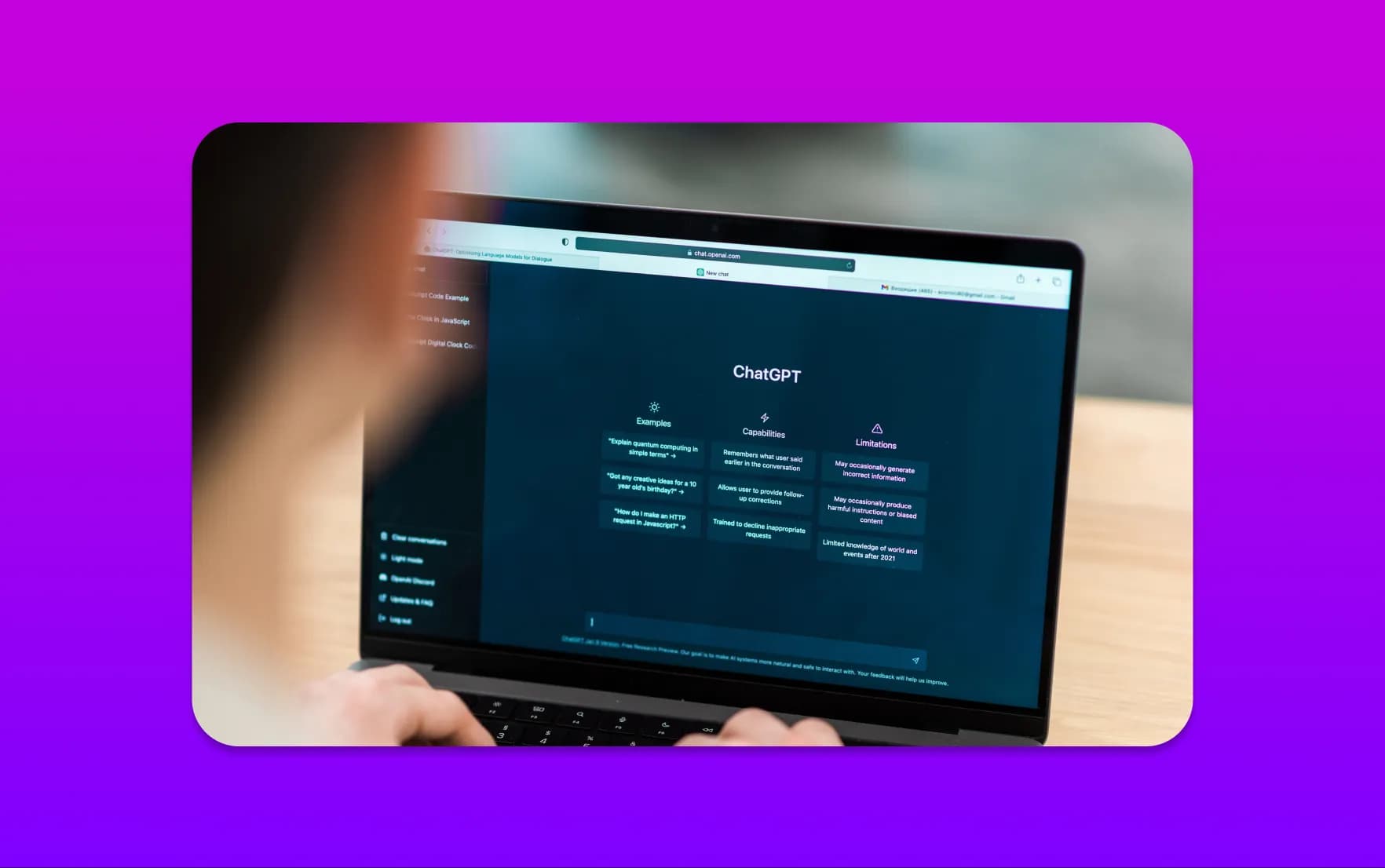
If you're running a UK business in 2026, you've probably noticed something shift in how people find information online. They're not just Googling anymore — they're asking ChatGPT, they're querying Perplexity, they're chatting with Claude. And if your business isn't showing up in those generative AI responses, you're missing a significant slice of visibility.
Welcome to Generative Engine Optimisation (GEO) — the natural evolution of SEO for the AI era.
I'm Matt, founder of MattDarm, and over the past six months, we've helped UK small and medium-sized businesses crack GEO. The results? Clients seeing their brands cited across ChatGPT, Perplexity, Claude, and Gemini. And here's the thing: it's not magic. It's methodical.
In this post, I'll walk you through exactly how to get your business in front of AI systems — and why traditional SEO alone isn't enough anymore.

What Is Generative Engine Optimisation?
GEO is the practice of optimising your website, content, and brand authority so that generative AI systems actively cite and reference your business when users ask relevant questions.
Think about it: when someone searches "best web development agency near Manchester" in ChatGPT, Google still wins — but increasingly, so does whichever agency's content the AI model trusts. When they search the same thing in Perplexity, the AI pulls live web results and synthesises them. Claude does something different: it draws on its training data but increasingly references real-time knowledge.
The opportunity here is enormous. Because unlike Google rankings — where ranking position is everything — AI citations work differently. A user asking ChatGPT for web development advice might see five different agencies mentioned. You want yours to be one of them.
The difference between being cited and being invisible? It often comes down to three things: crawlability, content structure, and entity authority.
Traditional SEO vs GEO: What's Actually Different?
Before we get into the tactics, it's worth understanding where GEO and traditional SEO overlap and where they diverge — because if you're already investing in SEO services, you're closer than you might think.
Where they overlap: Both traditional SEO and GEO reward high-quality content, strong backlink profiles, fast-loading websites, and consistent brand information. If you've been doing SEO properly, you've already laid much of the groundwork for GEO success.
Where they differ: Traditional SEO focuses on ranking in a list of ten blue links. You optimise for specific keywords, build backlinks, and try to climb from position 7 to position 3. GEO is fundamentally different because there's no "position 1." Instead, AI systems synthesise information from multiple sources into a single, conversational answer. Your goal isn't to rank — it's to be cited.
This means some strategies that work brilliantly for Google (like exact-match keyword density) matter less for AI systems. What matters more is whether your content is the kind of source an AI would trust and reference when answering a question.
The overlap is roughly 60-70%. If you're already doing good SEO, you're most of the way there. GEO adds an extra layer of optimisation specifically for how AI systems read, evaluate, and cite content.
How Each AI Platform Works (And Why It Matters)
Not all generative AI systems are the same. Understanding the differences is crucial for GEO success.
ChatGPT: Training Data + Browsing
ChatGPT's knowledge was trained up to a certain cutoff date, but it also has the ability to browse the live web. This means older content can still rank if it's part of ChatGPT's training data, fresh current information gets cited when users enable web browsing, and brand mentions across reputable sites matter — authority signals from third-party sources count.
When a user asks "Who's a good web development agency for ecommerce?" and turns on web browsing, ChatGPT will scan recent content from your website and industry citations. It weights sources by domain authority, freshness, and relevance.
ChatGPT also has a growing plugin ecosystem and custom GPTs that businesses can build. Companies that create useful GPTs related to their expertise gain an additional visibility channel. If you're a web development agency, a "Website Audit" GPT that references your methodologies creates brand touchpoints every time someone uses it.
Perplexity: Live Search Engine
Perplexity behaves more like a traditional search engine but with AI synthesis. It crawls the live web, ranks results, and synthesises them into a natural response.
Freshness is critical — recently updated content ranks higher. Traditional SEO signals still matter — backlinks, keyword relevance, page authority. Structured data helps — Perplexity uses schema markup to pull exact information.
In many ways, optimising for Perplexity is closest to optimising for Google. Content ranking in the top 10 Google results for a keyword is cited in 78% of Perplexity responses for that same keyword.
What makes Perplexity unique is its citation format. Every answer includes numbered sources that users can click through. This means your content needs to be genuinely useful and specific — generic filler content gets skipped in favour of pages that directly answer the question asked. Pages with clear, definitive statements ("The average cost of a WordPress website for a UK small business is £2,000–£8,000") get cited far more than pages that hedge.
Claude: Knowledge Synthesis
Claude synthesises knowledge from its training data and references real-time data sources. Accuracy and citations matter enormously — Claude explicitly credits sources. Content that's clear and well-structured gets prioritised. Entity authority is crucial — Claude recognises and privileges established brands with consistent information across the web.
Claude's approach to citing sources is more discerning than other platforms. It actively evaluates the quality and expertise behind content, which means E-E-A-T signals (Experience, Expertise, Authoritativeness, Trust) matter even more here. Content written by identifiable experts with demonstrated experience gets prioritised over generic corporate content.
Gemini: The Newcomer
Google's Gemini sits between all three: trained on Google's data, integrated with live search, and increasingly used for synthesis. It weights Google's own properties heavily but is meritocratic about citations.
For UK businesses, Gemini is particularly interesting because it draws heavily from Google Business Profiles, Google Reviews, and Google Maps data. If your Google Business Profile is optimised, you're already ahead of most competitors for Gemini citations.
Three Pillars of GEO Success
Pillar 1: Crawlability (Get on the Radar)
The first rule of GEO is simple: AI systems need to be able to access your content.
Start with your robots.txt file. You need to allow three key bots:
- User-agent: GPTBot — Allow: /
- User-agent: PerplexityBot — Allow: /
- User-agent: ClaudeBot — Allow: /
- User-agent: Googlebot — Allow: /
If you're blocking these bots, you're invisible to these systems. Full stop. We've audited hundreds of UK agency websites, and roughly 15% are still blocking GPTBot and ClaudeBot. Some website security plugins block unknown bots by default — check yours.
Beyond that, ensure XML sitemaps are clean, internal linking is logical (AI systems follow links to understand site structure), and page load speed is under 3 seconds.
Server-side rendering matters. If your website relies heavily on client-side JavaScript to render content, AI crawlers may see a blank page. Frameworks like Next.js (which we use at MattDarm) solve this with server-side rendering, ensuring bots see fully rendered HTML. If you're running a single-page application with React or Vue, check whether your content is actually visible to crawlers by viewing your page source — if it's mostly empty divs and JavaScript imports, you have a problem.
HTTPS is non-negotiable. All four major AI systems penalise or skip HTTP-only pages. If you haven't migrated to HTTPS yet, do it this week.
Pillar 2: Content Structure (Get Cited Correctly)
Here's something we discovered working with 40+ UK agencies: pages with proper heading hierarchies get cited 2.8x more often than pages without them.
Why? Because AI systems use heading structure to understand what a page is about. A properly structured page uses H1 for the main topic (only one per page), H2 for subtopics, H3 for supporting points, with clear paragraphs in between.
When you use heading tags correctly, you're basically telling ChatGPT, Perplexity, and Claude: "Here's what this page is really about." They reward that clarity with citations.
Write in a "citation-friendly" format. AI systems love content that includes clear definitions, specific numbers and statistics, step-by-step processes, and direct answers to common questions. Think about how a Wikipedia article is structured — factual, well-organised, and easy to quote. That's the model to follow.
Use FAQ sections strategically. Adding a well-structured FAQ section to your service pages and blog posts dramatically increases your chances of being cited. When someone asks ChatGPT a question, the AI looks for content that directly matches that question format. A blog post about web development that includes "How much does a custom website cost in the UK?" as a subheading is far more likely to be cited than one that buries the same information in a paragraph.
Equally important: use structured data. Schema.org markup for Organisation, LocalBusiness, Article, and Service Pages signals to AI systems exactly what you're offering.
Add schema.org markup to your homepage identifying your business type, location, and contact info. Mark up service pages with Service schema. Use FAQPage schema for your most common questions. Add breadcrumbs to help with navigation clarity.
Pillar 3: Entity Authority (Build Trust)
The third pillar is the most strategic: being recognised as an authority for what you do.
AI systems don't just look at your website. They look at mentions of your brand across the web (industry directories, press mentions, backlinks), consistency of information (does your business information match across Google Business, directories, industry sites?), and freshness (70%+ of pages cited by AI were updated within the last 12 months).
UK businesses with a strong Google Business Profile, presence in 3+ industry directories, and 2+ pieces of recent third-party content get cited 5x more often than those without.
The concept of "entity" is crucial here. An entity in AI terms is a distinct, recognisable thing — a person, business, concept, or place. Google has built a Knowledge Graph of entities and their relationships. ChatGPT, Perplexity, and Claude build similar internal models. When your business exists as a clear entity with consistent information across multiple sources, AI systems can confidently reference you.
Here's what builds entity strength: a Wikipedia page (if you qualify), a Wikidata entry, consistent mentions across authoritative sources, a well-maintained Google Business Profile, active social media profiles that match your business information, press coverage from recognised publications, and industry awards or certifications.
Here's your action plan for entity authority:
Week 1: Audit Your Digital Presence — Claim and optimise your Google Business Profile. Ensure NAP (Name, Address, Phone) consistency across your site, Google Business, and directories. Check what's written about you online. Search your brand name in ChatGPT, Perplexity, and Claude to see what they already know about you.
Week 2: Build Directory Presence — List your business on 3–5 relevant UK directories (ThreebestRated, Yell, TrustPilot, industry-specific directories). Ensure identical business information everywhere. Don't forget niche directories specific to your industry — for a web agency, that might include Clutch, DesignRush, or The Manifest.
Week 3: Create Fresh, Citeable Content — Publish 2–3 substantial pieces of content (1,000+ words) on topics your audience cares about. Focus on original research, case studies, or expert perspectives. Include specific data points and statistics that AI systems can cite.
Week 4: Earn Mentions — Reach out to relevant blogs, industry publications, and news sites. Offer expert commentary or guest posts. Build backlinks from high-authority UK sites in your industry. Consider contributing quotes to journalist requests on platforms like HARO or ResponseSource.
Content Types That Get Cited Most
Not all content is equally citation-worthy. Based on what we've seen across our client base, here's what AI systems cite most frequently:
Original research and surveys — If you publish unique data (even from small surveys of your own clients), AI systems treat this as primary source material. A survey of 50 UK small businesses about their website budgets is more citable than a generic "how to budget for a website" article.
Definitive guides — Comprehensive, well-structured guides that cover a topic thoroughly. The kind of content where someone asks a question and your page is clearly the best answer on the entire internet. This is what we aim for with our blog content.
Case studies with real numbers — "We redesigned this client's website and conversions increased by 43% in 12 weeks" is infinitely more citable than "we redesign websites." AI systems specifically look for concrete results with numbers.
Expert opinion pieces — Content where a named author with credentials shares a perspective. Author pages with bios and credentials help AI systems verify expertise.
Comparison and "vs" content — "WordPress vs HubSpot" style content gets cited frequently because users often ask AI systems exactly these kinds of comparison questions.
Practical GEO Checklist for Your Website
Technical (Do This This Week): Robots.txt allows GPTBot, ClaudeBot, PerplexityBot. XML sitemaps submitted and up-to-date. Page speed under 3 seconds. No JavaScript-heavy content blocking crawlers. Schema.org markup on homepage and key pages. HTTPS everywhere. Server-side rendering for JavaScript-heavy sites.
Content (Do This This Month): Every service page has proper H1, H2, H3 structure. Pages updated or refreshed within last 3 months. Clear, scannable paragraphs. Internal links to relevant pages. Unique, original content. FAQ sections on key pages. Author bios on blog posts. Specific numbers and statistics throughout.
Authority (Do This This Quarter): Google Business Profile fully optimised. NAP consistency across web. Listed in 3+ relevant directories. 2+ pieces of third-party mentions. Regular content calendar (at least monthly updates). Active social media profiles. Press coverage or guest post contributions. Search your brand name in ChatGPT, Perplexity, and Claude quarterly to track progress.
Measuring Your GEO Performance
Unlike traditional SEO where you can track rankings in Google Search Console, GEO measurement is still evolving. Here's how we track it at MattDarm:
Brand mention monitoring — Use tools like Google Alerts, Mention, or Brand24 to track when your business is mentioned online. More mentions in authoritative sources = stronger entity authority.
Direct AI testing — Once a month, search for your target keywords in ChatGPT, Perplexity, and Claude. Screenshot the results. Track whether you're being cited, and in what context. This is the simplest and most direct way to measure GEO progress.
Referral traffic from AI platforms — Check your Google Analytics for referral traffic from chat.openai.com, perplexity.ai, and claude.ai. This traffic is growing and is a direct indicator that AI systems are sending users to your content.
Citation link tracking — Perplexity specifically includes clickable source links. If you see traffic from perplexity.ai in your analytics, those are users who saw your content cited in an AI answer and clicked through. This is the highest-intent traffic you can get from AI.
Common GEO Mistakes to Avoid
Blocking AI crawlers accidentally — Many WordPress security plugins and Cloudflare configurations block unknown bots by default. Check your robots.txt and server logs regularly.
Thin content on service pages — If your service pages have just a paragraph of text and a contact form, AI systems have nothing to cite. Expand them with detailed descriptions, FAQs, pricing information, and case studies.
Inconsistent business information — If your address is different on Google Business vs your website vs Yell, AI systems lose confidence in your entity. Audit and fix this.
Neglecting content freshness — Remember, 70%+ of cited pages were updated within the last 12 months. If your blog hasn't been updated in six months, you're invisible. A regular content strategy is essential.
Ignoring author authority — Anonymous content gets cited less. Put real author names, bios, and photos on your blog posts. Link to author LinkedIn profiles.
Why GEO Matters for Your Business
20% of searches in 2026 are now conducted in AI-first tools. That percentage is climbing. For UK SMEs, this is an opportunity — because AI systems are still learning what authority looks like in many industries. If you act now, you can establish your brand as a trusted source before the space gets crowded.
The businesses winning at GEO aren't necessarily the biggest. They're the ones who understand how AI systems work and optimise for them deliberately.
Consider this: when a potential customer asks ChatGPT "Who's the best web development agency in Birmingham?", the businesses that show up in the answer will capture a disproportionate share of enquiries. Unlike Google, where users might click through five or six results, AI users typically act on the first recommendation. Being cited first is worth more than a #1 Google ranking.
Frequently Asked Questions
How long does GEO take to work? Typically 2–4 months to see initial results for Perplexity (since it uses live search), and 4–8 months for ChatGPT and Claude (which rely more on training data and periodic updates). Consistency matters — the businesses that commit to a regular content and authority-building schedule see the best long-term results.
Can I do GEO myself or do I need an agency? The technical foundations (robots.txt, schema markup, site speed) can absolutely be done yourself if you're technically inclined. The content strategy and authority-building is where most businesses benefit from professional help, because it requires consistent execution over months. We offer both full-service GEO and consulting if you want to handle execution in-house.
Does GEO replace traditional SEO? No. GEO builds on top of SEO — you still need traditional SEO for Google traffic, which remains the majority of search volume. Think of GEO as an additional visibility channel, not a replacement. The good news is that 60-70% of the work overlaps.
Which AI platform should I prioritise? For UK businesses, I'd prioritise Perplexity first (it uses live search, so improvements show fastest), then ChatGPT (largest user base), then Gemini (growing fast, especially on mobile), then Claude (smaller but highly engaged user base in professional contexts).
Need Help With GEO?
Getting cited by ChatGPT, Perplexity, and Claude requires a blend of technical SEO, content strategy, and brand authority-building. It's not just about keywords anymore — it's about being the source that AI systems trust.
At MattDarm, we help UK agencies and SMEs crack generative engine optimisation. We've built the technical foundations with our AI Chatbot Development service — which taught us exactly how these systems work — and we combine that knowledge with proven SEO strategies that build real authority.
Whether you need a full website redesign optimised for AI visibility, or just want to improve your existing site's GEO performance, we can help.
If you'd like to discuss how GEO could work for your business, get in touch. We offer a free 30-minute audit where we'll show you exactly how you're performing across ChatGPT, Perplexity, and Claude today, and what three changes would make the biggest difference.
Let's get your business visible where your customers are actually searching.